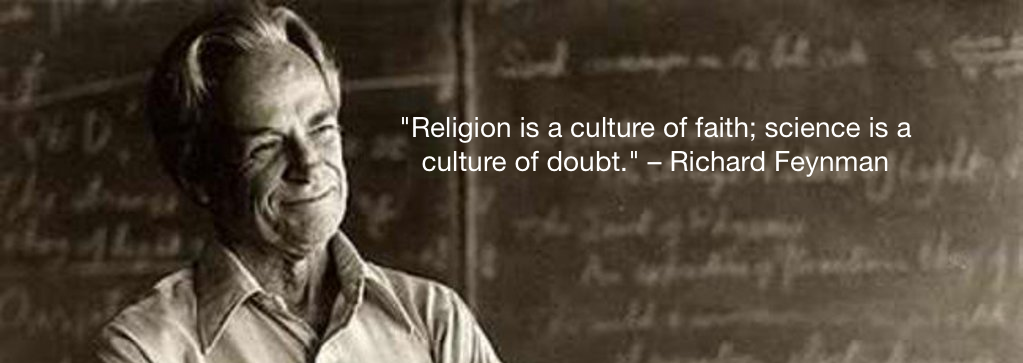
I’ve been pondering this lately, what makes you change your mind? Is it data? A well told story? Did you research and test hypotheses or something else? What eventually got you to accept that a view you held was not right?
A paper published in Science called When contact changes minds: An experiment on transmission of support for gay equality has been retracted. The idea was just talking to an actual gay person would significantly change a person’s opposition to gay marriage. Certainly dealing with a person in the flesh has some influence, but changing someone’s mind for “3-week, 6-week, and 9-month” time periods probably takes more than someone screaming epithets (wait that’s Twitter and Facebook).
For me, it took two well-researched well-written books: The Skeptical Environmentalist: Measuring the Real State of the World by Bjørn Lomborg (2001) and The Rational Optimist: How Prosperity Evolves by Matt Ridley (2010). Until then, I had listened to my tribe and followed their leads (with difficulty and cognitive dissonance), after these books I relaxed much more about the issues my tribe worried about.
I think the main point of [The Skeptical Environmentalist] was to challenge our notion that everything is going down the drain, and I don’t see any reason to revise that…I’m trying to recapture much of what the left stood for–when we believed in progress, when we believed that scientific understanding could lead us ahead and not just rely on tradition. … Unfortunately, I find that a fair amount of the left has turned towards a romanticized view of the world. –Bjørn Lomborg
So I left my tribe which had started down the romantic path. I started to concentrate on the issues that will make the world better. These are items that will help the most people with the limited resource of money (courtesy of the Copenhagen Consensus):
- Micronutrient supplements for children (vitamin A and zinc) (Challenge: Malnutrition)
- The DOHA development agenda (Challenge: Trade)
- Micronutrient fortification (iron and salt iodization) (Challenge: Malnutrition)
- Expanded immunization coverage for children (Challenge: Diseases)
- Biofortification (Challenge: Malnutrition)
- Deworming and other nutrition programs at school (Challenge: Malnutrition & Education)
- Lowering the price of schooling (Challenge: Education)
- Increase and improve girls’ schooling (Challenge: Women)
- Community-based nutrition promotion (Challenge: Malnutrition)
- Provide support for women’s reproductive role (Challenge: Women)
Have you changed your mind about what is important for humanity to tackle?

 Nullius in Verba
That is a great quote from Lomborg.
Ive written about this myself having shifted my position radically from “downwinger” to “upwinger” some years ago- and like yourself, Lomborg and then Ridley were two of my main inspirations and influences (and still are).
I think a number of things have to converge for a radical shift like that. These are some of the factors that played a role for me:
firstly, in terms of data, the peak oil doom I was predicting didnt happen. After a few years of no collapse and things basically carrying on pretty much as normal I just had to reassess my position. Cognitive dissonance would set in otherwise and reality just seemed to trump the ideology all too clearly- even the 2008 crash didnt seem to be anything like the Mad Max scenario we had been expecting.
Secondly, I was moving away from my tribe for other reasons- the crazy conspiracy theories, the superstitions, the hypocrisy of many of their stances (they were more than happy to take the benefits of the modern world when it suited) all became too much and I started openly challenging them more and more.
Thirdly, and most importantly I think, I found another tribe to move to- in books and literature, and online mainly. Over time I came across more people in the real world who were going through similar transitions.
I think that is really important because no-one can really stand alone for long. We need community on some level, like-minded people to gravitate towards and validate our new perspective, otherwise it is too hard.
Our nomadic ancestors would die if they were ostracized from the tribe and I think that is why tribalism has such a grip on people today and why changing minds is so hard. Building welcoming communities that are able to entice people over from the Dark Side is one of the most important things we can do.
Good stuff, as always, Graham. I, too, have found my tribe online. One might think (as you came to realize) that Peak-Oilers, like the Millerites, are just standing around long after the world-changing event was supposed to have happened and say “Hold on, wasn’t there supposed to be a catastrophe? What happened?” But they don’t. Apocalypsers just look to the next sunrise and are sure that it is a flaming meteor that will crash into our planet. Doom is always just around the corner.
Apparently, not all are cursed with self-awareness.