
I will be submitting a letter to California’s State Water Resources Control Board, since the “workshop” went way beyond time and it began to look like I would not get to speak until midnight, if at all.
My name is Norm Benson. I am a retired Cal-Fire forester, and until our water plant was purchased by a larger private company, I was the water master for the Crescent Bay Improvement Company’s water plant which served 24 connections. I am also a libertarian who prefers recommendations to regulations.
There is an adage: if something cannot go on forever it will stop.[1] The state legislature, not content with allowing the problem to be addressed by people and their water providers and wait for the increased storage passed by voters in 2014,[2] over time, yelled “We have to do something about our phony baloney jobs, gentlemen (and gentlewomen)! CLIMATE CHANGE!!!!” So, in 2018, they passed Assembly Bill (AB) 1668 and Senate Bill (SB) 606 which directed the California State Water Resources Control Board (State Water Board or Board) to adopt standards for urban retail water suppliers (suppliers) for the efficient use of water and performance measures for commercial, industrial, and institutional (CII) water use.
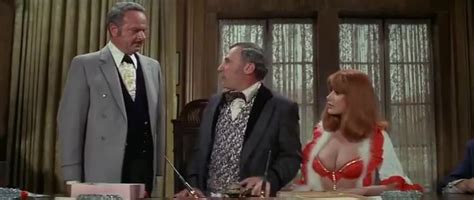
WE’VE GOT TO PROTECT OUR PHONY-BALONEY JOBS!
Thus it is that we have, as a result of a five year effort by the Water Board, a draft regulation to Force Conservation to be a Way of Life.
Every regulation is a demand that someone do what he doesn’t want to do, refrain from doing what he does want to do, or pay for something he doesn’t want to pay for, and those demands are backed up by agents with guns.[3] The California State Water Board’s proposed regulation for “Making Conservation a California Way of Life” is no different. Chairman’s Joaquin Esquivel’s protestations notwithstanding, the velvet glove still covers the state’s iron fist.
Mandates are not magic bullets. Mandates get enforced with real bullets.
At its core, government is force. If California’s policymakers want to regulate society toward their vision of perfection, they are going to need ramp up government force. During my career with Cal-Fire, I enforced the state’s forest and fire laws. I can tell you firsthand, every enforcement action is a confrontation. And confrontations do not always end well. The more rules on the books, the more enforcement agents will interact with people who don’t share the vision of the regulator, and who resent constant harassment. This is especially true for a regulation that will cost twice the sum of its benefit.[4]
This proposed regulation is a very very very bad idea indeed. This regulation hits the trifecta for bad.
- It will make water providers to Californians and visitors do something they do not want to do: more red tape, reporting to a regulatory agency, and acting as a surrogate enforcer for the state to comply with this regulation.
- It will make Californians and visitors refrain from doing something they want to do, like laundry or bathing.
- Both water users and water providers will be paying in money, time, and frustration to meet a standard that applies to only 10% of California’s water use. The remaining 90% goes to agriculture and fish.
Both my wife and I have allowed our water operator’s license lapse, since our water company has been bought by a larger private water company. I was the only paid employee, and I was part-time employee paid less than a fast-food worker. If our company were not purchased, and this regulation were to go into effect, we and our water company would give up and turn the task of providing water over to the state.
Some rules are obviously necessary. Everyone agreeing to drive on the right side of the road, for instance, is a sensible check on chaos of complete liberty to drive on the left, the right, or down the middle. The goal of government therefore is to provide just enough rules to allow the maximum amount of liberty with the minimum of chaos. Yet we now have too many rules that get frequently changed. This will, as James Madison wrote, “poison the blessings of liberty itself.[5]”
The presentations, given at the October 4, 2023 workshop, show that conservation takes lots of time, money, and communication. They are telling you that the point of diminishing returns has been hit. The low hanging fruit has been picked. The presentations also show that to meet the proposed regulations will require extensive and expensive work. Technical work that is expensive and hard to come by. It will undoubtedly hit disadvantaged communities hardest. For those who point to Los Angeles or other large metropolitan areas, let me say that finding licensed engineers to take one technical specialty to meet this board’s regulation is not just difficult, it is impossible where I live.
I will end by quoting from a 2012-piece Senator George McGovern wrote in the Wall Street Journal, he notes that ultimately consumers pay the higher prices for the increased operating costs that accompany public regulation and government reporting requirements with reams of red tape.
“[C]onsumers do have a choice when faced with higher prices. You may have to stay in a hotel while on vacation, but you can stay fewer days. You can eat in restaurants fewer times per month or forgo a number of services from car washes to shoeshines. Every such decision eventually results in job losses for someone. And often these are the people without the skills to help themselves — the people I’ve spent a lifetime trying to help….
“The problem we face as legislators is: Where do we set the bar so that it is not too high to clear? I don’t have the answer. I do know that we need to start raising these questions more often.”
I believe the bar has been set much too high. I hope the Water Board will reconsider this regulation which will disrupt the lives of visitors and the citizens of California while providing very little to zero benefit to them.
[1] Attributed to economist Herb Stein. https://quoteinvestigator.com/2018/04/28/go-on/
[2] In November 2014, California voters passed Proposition 1, the Water Quality, Supply, and Infrastructure Improvement Act, which authorized $7.5 billion in general obligation bonds to fund ecosystems and watershed protection and restoration, water supply infrastructure projects, including surface and groundwater storage, and drinking water protection.
Proposition 1 included $2.7 billion for investments in water storage projects, which is being administered by the California Water Commission through the Water Storage Investment Program (WSIP). The WSIP funds projects that provide public benefits, such as ecosystem improvement, flood control, and recreation.
As of October 2023, the WSIP has committed funding to eight projects that will collectively boost California’s water storage capacity by 2.77 million acre-feet. These projects are currently in various stages of development, and some are expected to be completed within the next few years.
[3] Saying by Harry Browne
[4] “The State Board’s SRIA estimates a net benefit of $2.2 billion and a benefit-cost ratio of 1.24; M Cubed’s analysis determined it would cost $7.4 billion and has a benefit-cost ratio of 0.53. (Any benefit-cost ratio greater than 1 is good; less than 1 is not.)” https://mavensnotebook.com/2023/10/03/feature-state-water-board-to-hold-public-hearing-on-the-making-conservation-a-california-way-of-life-but-does-the-proposed-regulation-make-economic-sense/
[5] “The internal effects of a mutable policy are still more calamitous. It poisons the blessings of liberty itself. It will be of little avail to the people that the laws are made by men of their own choice, if the laws be so voluminous that they cannot be read, or so incoherent that they cannot be understood; if they be repealed or revised before they are promulgated, or undergo such incessant changes that no man who knows what the law is today can guess what it will be to-morrow. Law is defined to be a rule of action; but how can that be a rule, which is little known and less fixed?” – excerpt from James Madison, Federalist Paper #62, 1788

 Nullius in Verba