These graphs were posted without data points highlighted here last week in part because the governor of California called for additional fire staffing due to the state’s severe drought and I was curious if a correlation existed between low than average precipitation and fire:
The Governor’s drought State of Emergency directed CAL FIRE to “hire additional seasonal firefighters to suppress wildfires and take other needed actions to protect public safety during this time of elevated fire risk.”
But does a drought, or a wet year, mean “increased fires in both urban and rural areas”? The graphs below show the number of fires (1987-2012), the total acreages (1987-2012), and statewide in precipitation in California (1895-2012). If there is a correlation between increased fires and precipitation, it does not jump right out.
As noted on those graphs, a relationship between below average precipitation and either the number or acreage of fires, does not “jump right out.”
I first highlighted the well below average precipitation years (while none of the years from 1987 to 2012 are of the magnitude of 1976/1977 or this year’s drought, these data are what there is to work with). Then I highlighted those years on the fire acreage and number of fires charts. There does not seem to be a correlation either to the contemporaneous year or the one to two years following the low precipitation year. Additionally, my memory of the years 1976 and 1977 is that they were not particularly big fire years.
Still, 2014’s drought looks to be unprecedented in California’s recorded history.[1] Additional staffing for Cal Fire and increased vigilance are prudent.
Acreage burned in CA 1987-2012
California Rainfall
Number of Fires in California 1987-2012
[1] Though, Two mega-droughts occurred in what is now California long before we started to put massive amounts of greenhouse gases into the atmosphere. One mega-drought started in 850 A.D. and ended in 1090. After a 50-year break, another mega-drought came in that lasted until 1320. That is 240 years and 180 years, respectively.
Firefighters assigned to the California Department of Forestry and Fire Protection (CalFire) survey the remains of a business on Catalina Island that was ravaged by a wildfire. U.S. Navy photo by Mass Communication Specialist Third Class Daniel A. Barker (May 11, 2007) (Photo credit: Wikipedia)
With limited rainfall and moisture levels already resembling the state’s peak fire season, the California Department of Forestry and Fire Protection (CAL FIRE) has hired 125 supplemental firefighters in Northern California and extended seasonal firefighting forces in Southern California due to dry winter conditions.
The Governor’s droughtState of Emergency directed CAL FIRE to “hire additional seasonal firefighters to suppress wildfires and take other needed actions to protect public safety during this time of elevated fire risk.”
“We can’t make it rain,” said Governor Brown, “but we can be much better prepared for the terrible consequences that California’s drought now threatens, including dramatically less water for our farms and communities and increased fires in both urban and rural areas.”
But does a drought, or a wet year, mean “increased fires in both urban and rural areas”? The graphs below show the number of fires (1987-2012), the total acreages (1987-2012), and statewide in precipitation in California (1895-2012). If there is a correlation between increased fires and precipitation, it does not jump right out.
We Californians have had a pleasant climate these past few months. During the clear spell here in Lake County where I live, temperatures had even been in the seventies—tee-shirt and shorts weather. So far, the winter weather has been, by any standard, stunningly spectacular. One of the most stunning things about this winter is its lack of precipitation (last weekend’s storm was the exception to the rule). November through March is not supposed to be warm with gentle sunshine; January should have been wet and cold. January 2014 should go into the record books as the driest and warmest January in California since we started putting those figures on paper.
One dry year might not be bad, but California has had two dry years in a row before this one. Greg Giusti, County Director for UC Cooperative Extension, points out that droughts are part of “the reality of living in this climate zone.”[1] California has a Mediterranean climate of hot, dry summers and cool, wet winters. Giusti said that even if this drought was no worse than the one in the 1970s, its effect could be greater. Besides California now having twice the population when compared with the 1970s,[2] there are now legal requirements to consider the needs of wildlife.
“This is our hurricane Sandy,” Giusti said. California’s precipitation is currently trending lower than the 1923-24 record, which at 10.5 inches was the lowest precipitation ever measured in California; 1977 was 11.6 inches.[3] And this season, with two-thirds of this rainy season done, that record may fall. Last weekend’s storm did not end our drought. It was the equivalent of putting eight ounces of water into a five-gallon bucket.
This third dry year in a row has caught the attention of Sacramento. On January 17th, Governor Brown declared a state of emergency, calling for a voluntary 20 percent reduction in water use.[4] The State Water Project, which provides water to 25 million Californians and roughly 750,000 acres of irrigated farmland, is run by the Department of Water Resources. On January 31st, the Department of Water Resources announced for the first time ever in the SWP’s 54-year history—a zero allocation to all 29 public water agencies that buy from it.[5] While last weekend’s storm helped, “…it would need to rain and snow heavily every other day from now until May to get us back to average annual rain and snowfall,” state officials said in their press release.
Droughts stress all living systems: people, animals, and plants all need water for their survival. For most of us, a drought will be an expensive inconvenience. We may have to drill new wells or even have water trucked in. We certainly will pay higher prices for food. For those in agriculture, drought can be devastating.
Crops and livestock need ample water to grow, so drought hits agriculture especially hard. Steve Tylicki, general manager and viticulturist at Steele Wines, says in his forty years of experience in agriculture, this is the worst he has ever seen it, and it is even worse than the drought of 1976/1977.[6] Their vines will be pruned to withstand the drier soil conditions. After this pruning, he expects the vines will produce around 20-25 percent less than average. In his vineyards that do not have water for irrigation or frost protection (most water in established vineyards is for frost protection) he expects a 40 percent crop reduction this year.
My neighbor asked me if this drought was the result of Global Warming. It is certainly due to the ever-changing nature of the earth’s climate; how much of that change can be attributed to humans is an open question. Drought has visited California before. Two mega-droughts occurred in what is now California long before we started to put massive amounts of greenhouse gases into the atmosphere. One mega-drought started in 850 A.D. and ended in 1090. After a 50-year break, another mega-drought came in that lasted until 1320.[7] That is 240 years and 180 years, respectively. If this drought ends after this year, we will count ourselves lucky. Three years, in the cosmic scheme of things, is a mere drop in the bucket.
The European Food and Safety Agency (EFSA) has just released a 500 page report on the risks of bisphenol A (BPA) and given its opinion to what is a safe level of daily ingestion. Risk Bites has distilled their report into a video of less than five minutes. (Here is a link to Risk Bites blurb for more resources)
Here is a redacted sentence from a recent, on the whole, thoughtful essay:
We oppose X because we oppose the unsustainable agricultural system they serve.
Please tell me how today’s “agricultural system” is “unsustainable.” And how is it less sustainable than the agriculture practiced 100 or 1000 or 10000 years ago?
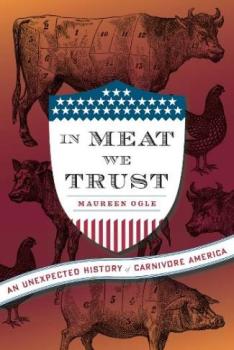
I have the perfect gift for the foodie in your life: “In Meat We Trust: An Unexpected History of Carnivore America,” written by Maureen Ogle, it traces the origins of our food system and its meat-centric bias. “The moment European settlers arrived in North America,” Ogle says, “they began transforming the land into a meat-eater’s paradise.” Today, we Americans consume about the same amount as the colonists, an astounding 250 pounds a year per man, woman, and child in this country.
This book traces our food system from its colonial origins to today. It is a fascinating journey through crowded and noisy streets filled with pigs, sheep, and cattle, and slick and redolent with animal urine, feces and blood to today’s highly efficient system that is hidden from most of us.
You may want to dismiss her book as merely history, but if you ignore the real story she tells, the history, you allow storytellers to fabricate a mythical past that never was and preach “solutions” that will never be. As Ms. Ogle told me in an e-mail interview:
“Much of the discussion about our ‘broken’ food system is simplistic. Too simplistic, in that simplifying causes can (and in this case does) lead to simplistic and impractical solutions. I believe (and hope!) that if all of us take time to understand how and why we got to where we are—the actual complex history of that how/why—we can have a more informed, substantive conversation about agriculture’s future.
“An example of ‘simple’ is that mythology about agriculture in American history. Our myth revolves around the sturdy yeoman farmer, living off the land in perfect harmony with nature, etc. Many well-meaning critics of today’s food and ag systems want to return to that imagined past. But that past is just that: imagined and mythological. It can’t and won’t address the complex problems of feeding not just an urban nation, but large parts of the world, too.”
What was the impetus to write a book on meat in America?
“What links my four seemingly disparate books (plumbing, Key West, beer, meat) is my [historian’s] desire to understand what it means to be an American. In that respect, meat was a perfect vehicle to further my quest for understanding: as the cliché says, food and diet tell us much about a people. I believed that if I dug into our meat culture, I would learn more about the American character. And, hooray, I did!”
Many, such as food writer Michael Pollan and chef and organic advocate Alice Waters, believe that organically grown food would be much lower impact. What leads you to disagree?
“Pollan and company tend to regard ‘organic’ as a kind of silver bullet that will repair our (allegedly) broken food system. That’s both a misleading and overly simplistic way to view the situation. I’ve got nothing against organic, in the field or on the table. What I object to is the notion that switching to organic farming is a practical alternative to meeting demands. Organic farmers will tell you that it’s a hard field to till: the bugs and pests and blights are all out there and they’re gonna attack whether you want them to or not.
“If we can figure out how to create an intensive organic agricultural system using the same amount of land and labor that we use now, well, go for it. But the reality is: we can’t. It seems to me that organic is more a smokescreen than a practical alternative; by offering up organic as the solution, critics can avoid dealing with hard questions.”
What was your biggest “aha!” discovery about our food system?
“Frankly, just how complex it is. I suspect that I’m like most Americans: I take food for granted. It’s everywhere I want to be and then some. But I’d never thought about the logistics of feeding a big nation, or the complexities involved when the majority of a society is urban and farmers are few in number. And that despite having lived in an agricultural state (Iowa) my entire life. So my ‘aha!’ moment was: Wow. This. Is. Complicated.”
* * *
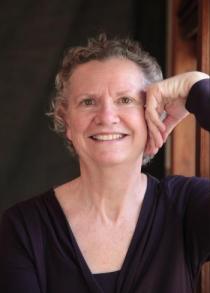
Maureen Ogle, author of In Meat We Trust
To sum up, this book, “In Meat We Trust” tells the true story of our food system. Our system evolved for rational reasons that still apply today. “We may not agree with the decisions that led to that state of affairs,” Ms. Ogle says, “and there’s good reason to abhor the consequences, but on one point we can surely agree: real people made real choices based on what was best for themselves and their families.” That is a real American story.
Had a good exchange in the comments section (and on Twitter) yesterday about David Ricardo’s Law of Comparative Advantage. My point in writing “Eat. Pray. Lovin’ It.” was to illustrate that people have always liked to pick up quickly prepared food. Workers willingly trade their money to save the expense (time and money and hassle) of food preparation. We trade what we are best at, and the act of trading in turn saves both time.
Matt Ridley‘s simple explanation is what I understand Comparative Advantage to be:
Cars line up in McDonald’s drive-thru. Denpassar, Bali.
On our way to the airport on the island of Bali (in Indonesia) we passed a McDonald’s restaurant. To some, McDonald’s represents the evil of corporations and their homogenization of the world, and its cultures, into one giant strip mall—McDonaldization. To me, McDonald’s represents what one writer calls “Ricardo’s Magic Trick.”
We were returning home from attending my son’s wedding. He and his now wife live in Bali at the moment. They are both Americans who met in Uganda, moved to Ubud, Bali so she could get a yoga teacher certification, and then got married there. (I know, it’s so typical it’s a cliché.) An artsy town, Ubud is Carmel or Mendocino without the sea, and pretends not to be upscale by keeping its village atmosphere façade. This is often done by not allowing in fast food franchises.
My wife and I stayed in a Bed & Breakfast (“home stay”) in Ubud not far from where Elizabeth Gilbert’s character in the movie Eat, Pray, Love had stayed. In the book—and the movie—after Eating (indulging herself in Italy) and Praying (asceticism in India), Gilbert tries to find balance in her life by staying in Bali. Instead of Balance, she finds Love. I also don’t know if she found Ubud’s one franchise, a tastefully decorated Starbucks (because even Dr. Evil’s island hideout had a Starbucks).
McDonald’s is a company that is good at one thing: delivering consistent, cooked food quickly at a reasonable price. They had tried to put one of their franchises in Ubud, but the outcry by white expatriates wanting an authentic Balinese experience kept the franchise out. Doing one thing well was what 18th century British economist, David Ricardo, called “comparative advantage.” Ricardo said that a person (or region or state) does not need to be able to do everything, but needs to do one thing only and then trade for the rest. The result saved labor and thus saved time to do other more profitable things.
Since ancient times, people have been on the go with little time available to make their own meals. Before the era of Christ, the people of Pompeii, like many in the Roman Empire, stopped at cauponae, sort of an early version of a McDonald’s restaurant that was loved by the ancient Romans. Caupone were frequented by the lower and middle classes for grabbing a bite before hurrying off to work elsewhere. They paid others to make their meals so that they didn’t have to worry about shopping, storing, cooking, and cleaning. The upper classes had their meals prepared at their homes. (Does this sound familiar?)
Of course, by doing only one thing, we must rely on others to provide those other things we need. Matt Ridley, in his book, The Rational Optimist, argues that such a requirement is a good thing: “Interdependence of the world through trade is the very thing that makes modern life as sustainable as it is.” He writes, “[S]uppose your local wheat farmer tells you that last year’s rains means he will have to cut his flour delivery in half. You will have to go hungry.” Today, you benefit from a global marketplace “in which somebody somewhere has something to sell you so there are rarely shortages, only modest price fluctuations.”
When we trade, we no longer have to do lots of tasks to keep going; we can trade our labor in one thing for others’ labors in other things.
The authentic experience: harvesting rice by hand under a broiling sun.
Trading means that we weigh the costs (not just the price but also the social implications) against the benefits (the need for the thing and its cost to our bank account and its result to our reputation) and do the one that outweighs the other.
In the case of McDonald’s, the expats felt that it would diminish their authentic Ubud experience. Many of the locals felt they were authentic enough and were willing to make the trade, thus freeing up time to do something else besides preparing food: “Cheap fast food? Sign me up; I’ve got to get to work!”
“The spotted owl is the poster boy on how to use the Endangered Species Act to accomplish a goal beyond the species itself and how things can get messed up.”
In hopes of helping the northern spotted owl’s numbers increase, starting this fall, the United States Fish & Wildlife Service plans to “remove barred owls from parts of up to four study areas in the northern spotted owl’s range…”[1]
Contrarian forest scientist, Dr. Bob Zybach sums the usefulness of Fish & Wildlife Service’s s plan thus: “Efforts to stabilize or increase spotted owls numbers have cost American taxpayers tens of billions of dollars, been partly responsible for unprecedented numbers of catastrophic wildfires, caused the loss of tens of thousands tax-producing jobs for western US families, created economic hardships for hundreds of rural counties, towns, and industries, and indirectly resulted in the deaths of millions of native plants and animals.”[2]
Even the liberal Daily Kos thinks the Fish & Wildlife Service plan is daft: “The spotted owl is the poster boy on how to use the Endangered Species Act to accomplish a goal beyond the species itself and how things can get messed up.”[3]The plan does have a few supporters (with multiple caveats). Though the Olympic Peninsula Audubon Society wants “continued, full protection of Barred Owls under the Federal Migratory Bird Treaty Act of 1918,” they “are willing to concede to experimental removal only for the specific purpose of determining whether long-term lethal control of Barred Owls is warranted and practical” and only to “prevent the Spotted Owl from going extinct.”[4]
What brought this plan on in the first place? Despite more than twenty years of federal protection, the northern spotted owl population has been declining at a rate between two and five percent (depending on who does the counting) per year. In 1990, the Fish & Wildlife Service listed the spotted owl as endangered[5], and since the spotted owl was said to need old growth forest components[6], the federal government put much of its forests off-limits to logging. That stopped 80% of the timber harvesting occurring in the Pacific northwest forests.
The barred owl (a cousin of the spotted owl) has been fingered as an accomplice to the loss of habitat. It arrived in spotted owl habitat in the 1970s, and, once there, outcompetes (and sometimes eats) the spotted owls and takes over their roosts.
How the barred owl muscled its way into spotted owl territory is debated. The idea used by Fish & Wildlife Service says they hopscotched their way across the U.S. using trees that people planted in the Great Plains as waystations. Another possibility is that they moved east through Canadian forests and down into the Pacific Northwest. Although neither idea explains how the barred owl can range south into Mexico.[7]
Despite the debate, there is a plan, and it is a bad idea:
First, it is unachievable. The barred owls cannot be eliminated because they like the habitat as much as the spotted owls, and this “invasion” by barred owls is a “natural” (as if anyone can agree what that definition is) phenomenon. People may have helped them, but the barred owls probably took the northern route through Canada too.
Second, when we have invasives such as zebra mussels and quagga mussels, Asian carp, nutria, kudzu, etc., that will hurt people and the environment, the threat of whether one owl outcompetes another owl for food is small beer. “The scope of the invasion of barred owls versus the relative impact of something like quagga and zebra mussels,” Greg Guisti, Lake County extension adviser told me in an interview. “I don’t know if you can compare them—they are literally apples and space shuttles.”
Third, the way we think of species and develop strategies is flawed. “[T]he old model for protecting species needs to adapt just like a species would,” wildlife biologist Jim Steele told me in an email. “But this will require a willingness for developers and managers to help with the problem of disappearing species and invasive introductions; and for environmentally concerned people to let them. Otherwise the interpretation of what is at risk goes to the agencies with the shrinking budgets who will find it easier to say no or nothing at all until it’s too late.”
“No,” Steele told me, “our money is not being spent wisely, but then you knew that.”
The Malthusian catastrophe simplistically illustrated. For Malthus, as population increases exponentially while food production can only increase linearly, a point where food supply is inadequate will at some point be reached. (Photo credit: Wikipedia)
“development that meets the needs of the present without compromising the ability of future generations to meet their own needs.”
It sounds simple. But how do we judge “the ability of future generations to meet their own needs”? In fact, the Bruntland Report drafters believed the present was robbing the future due to our consumption (largely due to our rising population). The idea that we are spoiling the earth with our numbers and the earth/mother nature responding harshly is anything but new.
In the third century, Tertullian wrote,
“Most convincing as evidence of populousness, we men have actually become a burden to the earth, the fruits of nature hardly suffice to sustain us, there is a general pressure of scarcity giving rise to complaints, since the earth can no longer support us. Need we be astonished that plague and famine, warfare and earthquake come to be regarded as remedies, serving, as it were to trim and prune the superfluity of population.”
“The power of population is so superior to the power of the earth to produce subsistence for man, that premature death must in some shape or other visit the human race. The vices of mankind are active and able ministers of depopulation. They are the precursors in the great army of destruction, and often finish the dreadful work themselves. But should they fail in this war of extermination, sickly seasons, epidemics, pestilence, and plague advance in terrific array, and sweep off their thousands and tens of thousands. Should success be still incomplete, gigantic inevitable famine stalks in the rear, and with one mighty blow levels the population with the food of the world.”
“[within a decade] the world will undergo famines — hundreds of millions of people are going to starve to death in spite of any crash programs embarked upon now.” – Ehrlich, 1968
The dominant patterns of production and consumption are causing environmental devastation, the depletion of resources, and a massive extinction of species. Communities are being undermined. The benefits of development are not shared equitably and the gap between rich and poor is widening. Injustice, poverty, ignorance, and violent conflict are widespread and the cause of great suffering. An unprecedented rise in human population has overburdened ecological and social systems. The foundations of global security are threatened. These trends are perilous—but not inevitable.
United Nations, Earth Charter, 1987
In 1980, the late Julian Simon, an economist, famously posed a bet to environmentalists that the price of any raw material would decline indefinitely. (The price of a material indicates its abundance, the more abundant it is the cheaper it is.) Ehrlich took the bet. Ronald Bailey wrote about it in his book EcoScam, “In October 1980, Ehrilch and Simon drew up a futures contract obligating Simon to sell Ehrlich the same quantities which could be purchased for $1,000 of five metals (copper, chrome, nickel, tin, and tungsten) ten years later as 1980 prices. If the combined prices rose above $1,000, Simon would pay the difference. If they fell below $1,000, Ehrlich would pay Simon. Ehrlich mailed Simon a check for $576.07 in October 1990.” The bet has now been documented in a book by Paul Sabin.
New York Times writer, John Tierney made his own bet on oil prices in 2005; “not because I knew much about Saudi oil production or the other ‘peak oil’ arguments that global production was headed downward. I was just following a rule learned from a mentor and a friend, the economist Julian L. Simon.” That rule was to have ‘skin in the game.’
As the leader of the Cornucopians, the optimists who believed there would always be abundant supplies of energy and other resources, Julian [Simon] figured that betting was the best way to make his argument. Optimism, he found, didn’t make for cover stories and front-page headlines. – John Tierny
Yes, our lives are sustainable. Despite the finite nature of everything we use. Stuff become resources when we (as a species) decide that the previous useless stuff now has value when used for energy, food, fertilizer, beauty, circuit boards, etc. And that realization occurs when we exchange ideas. Because we trade goods and services, the cross-fertilization of ideas happens as part of commerce.
As I have written before, it will be technological change (caused by trade) that makes the world more habitable for all its species, and not decisions to go without. Consider:
Land was freed up from agricultural production not by eating less meat, but by using machines for farming (since machines don’t need pasture).
It was the discovery of how to use coal, instead of wood, to power machines that saved forests, not from deciding to use less wood.
More land was freed up by making each acre more productive via synthetic fertilizers and pesticides, not by fasting once a week.
Whales were saved from extinction, not by lowering the amount of whale oil one bought, but by people buying the newer and more affordable kerosene (derived from coal) for lighting.
Even habitats can benefit from trade. According to Susan Hecht writing in the publication, Nature, El Salvador’s forests have increased, not shrunk, due to globalization, Salvadoreans working abroad send remittances to relatives so they no longer have to clear forests for subsistence farming.
In the 1970s, Ehrlich and Barry Commoner simply repackaged the classic Malthusian catastrophe into a formula to make it look sciency: I = P × A × T (where I = Environmental Impact, P = Population, A = Affluence, T = Technology).
Well two can play at that game: I = P × A/T. There, it’s all sciency.






 Nullius in Verba