We may not be able to see too far ahead on our way, but we can make the full journey that way.
Wherever you are bound, may your journey be one filled with wonder and hope for 2012.

Between Science and Politics Lies the Environment.
Norman Borlaug, father of the Green Revolution, estimated we could feed four billion people if we used organic farming. The earth now is home to seven billion people and will probably go to nine billion before leveling off and declining, according to the United Nations. Organic farming means 50% of our world population would die horrible deaths. Who should decide who lives?
Alternatively, we could double our farmland and cultivate over 80% of our earth’s land. Goodbye, rainforests.
Yes, there is another alternative, to lower population growth, but that is already occurring. The answer is not less food but more food and wealth to have that trend continue. (See this animated chart at gapminder.org) Population growth is plummeting. Not one country has a higher birth rate now than it had in 1960. “Most environmentalists still haven’t gotten the word,” writes Stewart Brand (of Whole Earth Catalog fame), “On every part of every continent and in every culture (even Mormon [his words]), birth rates are headed down. They reach replacement level and keep dropping.”
Why is it that organic farming cannot support as many people that conventional farming can? It turns out that pesticides and fertilizers both cut down on losses to pests and boost growth of the plants. Fossil fuels allow conventional farming to use less land than organic methods. “By spending not much energy to make fertilizer and run machinery — and trivial amounts of energy to ship the stuff we grow from the places it grows best,” writes Stephen Budiansky, a former editor of the scientific journal, Nature.
Organic farming is less efficient than conventional farming; as a result, the earth suffers. Without pesticides and fertilizers boosting yields, we have to press more land into production, land that was forested before being pressed into agricultural use.
Converting land to agricultural use is the prime cause of deforestation, according to the United Nations Food and Agriculture Organization (FAO) . Let me repeat that because it bears repeating.
Converting land to agricultural use is the prime cause of deforestation.
Conventional farming needs fewer acres. There is real environmental degradation in organic agriculture because it requires an average of 30% more than conventional agriculture.
“We have spared and conserved hundreds of millions of acres of land that otherwise would have had to be brought into agricultural production. That’s land that protects wildlife, that adds scenic beauty.- Stephen Budiansky
That means we spare wetlands, grasslands, forests, and rainforests from being cleared for agriculture.![]()
The earth cannot afford organic. We cannot afford organic. The ineluctable tradeoff comes down to land for agriculture versus land for wildlife. We should always pick nature and habitat over ‘natural’ food and terroir. Agriculture, whether organic or conventional fragments and diminishes habitat, displaces wildlife, and uses toxic pesticides (yes, organic farmers use “natural” pesticides).

Perhaps you have decided to toast the New Year with organic champagne or an organically produced high-gravity craft beer because organic is better, not just for you but for the planet. After all, you have made a New Year’s resolution to eat better and healthier while caring for the environment.
So, is organic superior to conventionally raised food? Well, some of my friends say there is. Such extraordinary claims require extraordinary evidence, and so far, there is not only little extraordinary evidence, there is zero extraordinary evidence that organically grown food is any better for you than conventionally grown food. Nor is there solid evidence that it tastes better.
No conclusive evidence shows that organic food is more nutritious than is conventionally grown food. And the USDA — even though it certifies organic food — doesn’t claim that these products are safer or more nutritious.
The United States Food and Drug Administration and Mayo Clinic are not alone. An article published in the American Journal for Clinical Nutrition, on the basis of a systematic review of studies, says:
[T]here is no evidence of a difference in nutrient quality between organically and conventionally produced foodstuffs.
A major independent research project released 30 July 2009 and conducted by the Nutrition and Public Health Intervention Research Unit at the London School of Hygiene & Tropical Medicine on behalf of the UK Government’s Food Standards Agency, concluded that organic food is no better for health than food produced by more advanced agricultural techniques. The study was the biggest of its kind ever conducted, reviewing all data collected on the topic over the past 50 years. In its conclusion the report says:
No evidence of a difference in content of nutrients and other substances between organically and conventionally produced crops and livestock products was detected for the majority of nutrients assessed in this review suggesting that organically and conventionally produced crops and livestock products are broadly comparable in their nutrient content.
The differences detected in content of nutrients and other substances between organically and conventionally produced crops and livestock products are biologically plausible and most likely relate to differences in crop or animal management, and soil quality.
There is no good evidence that increased dietary intake of the nutrients identified in this review which are present in larger amounts in organically than in conventionally produced crops and livestock products, would be of benefit to individuals consuming a normal varied diet, and it is therefore unlikely that these differences in nutrient content are relevant to consumer health.
For a copy of the UK government’s Nutrition and Public Health Intervention Research Unit report (pdf) click here.
In addition to its own research, Great Britain’s Food Standards Agency cite studies by the French Food Safety Agency and another by the Swedish National Food Administration:
In our view the current scientific evidence does not show that organic food is any safer or more nutritious than conventionally produced food. Nor are we alone in this assessment. For instance, the French Food Safety Agency (AFSSA) has recently published a comprehensive 128-page review which concludes that there is no difference in terms of food safety and nutrition. Also, the Swedish National Food Administration’s recent research report finds no nutritional benefits of organic food.
Findings published in Critical Reviews in Food Science and Nutrition say much the same:
Studies comparing foods derived from organic and conventional growing systems were assessed for three key areas: nutritional value, sensory quality, and food safety. It is evident from this assessment that there are few well-controlled studies that are capable of making a valid comparison. With the possible exception of nitrate content, there is no strong evidence that organic and conventional foods differ in concentrations of various nutrients… While there are reports indicating that organic and conventional fruits and vegetables may differ on a variety of sensory qualities, the findings are inconsistent…There is no evidence that organic foods may be more susceptible to microbiological contamination than conventional foods. While it is likely that organically grown foods are lower in pesticide residues, there has been very little documentation of residue levels.
Conclusion, toast to the New Year in with anything you wish. But, if your resolution is to eat healthier by making better choices, grab a vegetable or fruit instead of a bag a chips for a snack.
What about organic being better for the environment? Surely, the earth is better for organically raising food and fiber without artificial pesticides and fertilizers? We will look at that tomorrow.
Last weekend the Weekend Postcard was of our trip to the east coast of the USA. This week the postcards hit some of the high points of our 3 month stay. From mid-state New York to Richmond, Virginia must hold some of our country’s most uptight people. The drive east is rather easy and low stress. In New York state, the tempo of traffic picks up tremendously. More cars on the road, more aggressive drivers, angrier people, more horns. But, they do have a sense of humor about it all; the state of New York has signs advising drivers that they need to yield to blind people. Now, that’s funny.
I am sure that the state motto of New Jersey is ‘Get out of my f***ing way, a**hole. Hey, what are you looking at? Did you hear what I said?’ The state bird is the middle finger. The state song is a car horn.
I was in the Washington, DC area to use the National Archives II in College Park, Maryland. We found a place to stay within a mile of NA II. The original plan was for me to bike in. The roads and the traffic called that plan into question. I took a shuttle bus between the Archives buildings to get into DC.
Inside “The Beltway” of highways that ring Washington DC, it seemed that not one day went by without some sort of road rage-ish behavior. In Washington, D.C. we watched a cab pull to a curb at a corner, after which a Mercedes blared his horn, just behind the cab, for thirty seconds. Then, he pulled up along the cabbie and screamed obscenities at him. The Mercedes drove off, stopped with a screech of brakes, backed up yelled again at the cabbie, and finally he careered away into the DC traffic. Duuude, easterners take free speech very seriously.
A number of the photos were snapped while I was in the bus, so you may see some reflection from the shuttle’s window. My advice to anyone wishing to visit Washington, DC: take public transit and take a Valium. One look at L’Enfant’s plan for DC should dissuade anyone from driving in that city.
This last August my wife and I headed east. We strapped two bikes on top, threw camping gear, computers, clothes, toiletries, Immodium, and homebrew beer in the back, and drove across these United States to the east coast. We recommend this form of travel to everyone; driving across what is usually “flyover country,” is fun with straight and empty roads plus pleasant people in the “cities.” As an added bonus it does away with any direct interaction with those uptight drones of the Transportation Safety Administration. You don’t have to take off your shoes if you don’t want to.
Along the way, the family truckster (aka Volvo V70 XC) turned 200,000 miles on its odometer somewhere in South Dakota.
I write a column called the Green Chain for the Lake County Record-Bee‘s environmental page, the Green Scene. The Record-Bee printed this yesterday.
‘Twas the night before the Record-Bee’s Green Chain deadline.
I had writer’s block, and not for the first time.
When up in the sky, riding the clouds like a boat,
I spotted a wonder, a flying Chevy Volt.
Driven by Kris Kringle without reindeer with hoof,
it nose-dived straight into my roof.
Catching fire in a wink.
I said, “I’m going to get water to put it out, right here from the sink.”
I thought better of it yet,
and grabbed the old fire extinguisher, filled with still useful, Carbon Tet.
When I ran back to the outside, he’d already beaten down the flames
with an old reindeer hide.
He dropped down to my lawn.
“Drat, I sure miss Dandruff and Sitzbath, who now are gone.”
“Donder and Blitzen,” I said.
He turned, looked at me, and arched an eyebrow.
“Hmmph. Not bad for a guy who’s got writer’s block, right now.”
It was my turn to arch an eyebrow like his.
“So tell me, how do you know any of this?”
He made a ref’s timeout sign with his hands and quick.
“Look Sport, can we stop the Clement Moore, Night Before Christmas shtick?”
“I prefer to think of it as an homage.”
“Uh huh. You’re kidding, right? Look, I know about your writer’s block because the elves keep track of such stuff on the web.”
“The elves hack into computers?”
“The elves? Hackers? Ho, ho, ho.” His great beard bounced about. “Nah. They just use Facebook and Twitter. You wouldn’t believe what people post.”
“Can I use your phone?” he said and pulled out a card. “I need a tow. Boy, could I use Vomit and Pooka-head right now.”
“Comet and Cupid.”
“Whatever.”
I took him to the phone in the kitchen. “You learned about my writer’s block from my status update on Twitter?”
“Bingo.” He dialed and then put his hand over the receiver. “So, d’ya think you could fix me a double-shot cappuccino? It’s going to be a long night.”
When he finished giving his information to the dispatcher he plopped onto my kitchen chair.
I set a plate of cookies and the cappuccino on the table. “So, how are things on the North Pole?”
“Cold.” He slurped at the cappuccino. “You know, with this global warming stuff, everybody had worried that the polar bears and the ice caps would be gone this year. Frankly, I was looking forward to catching a Russian freighter and moving to the Bahamas like we did in the 1920’s.”
“The arctic ice was nearly gone in the 20s?”
“Sure, don’t you know any history?” He bit into a cookie. “Not bad for store-bought.”
“Thank Pepperidge Farms.”
“As for polar bears, did you know we have five times the population of those four-legged eating machines than we had seventy years ago? Geez Louise, Mrs. Clause has to shoo more of them away from the clothesline every year.”
The phone rang and I answered it. “The tow truck will be here in ten minutes.”
“Thanks.” He set his empty cup down. “Man, I miss Dopey and Sneezy.”
“Reindeer?”
“Nah, they were a couple of dwarfs that hung around this hot number named, ‘Snow White.’ Really lousy poker players. I miss them.”
“By the way,” I said. “What happened to your reindeer?”
“Probably in some hunter’s freezer now. Upper management said they had to go, said we needed a smaller carbon footprint, said those animals spewed too much methane into the upper atmosphere causing an increase in global warming, this according to the pointy headed engineers’ climate models.”
I nodded. “I bet you miss them.”
“The engineers?”
“The reindeer.”
“Well, right now, yeah. But, the new Volt has a heater and factory air. That’s nice. Though, I have to charge it for hours every 40 miles and there is a slight chance of fire in a crash.”
“So I noticed.”
“One of those fuel-efficient diesels would’ve been better; some of them get 50 miles to the gallon. Do you know how long it takes to go around the world, dropping off presents, when you have to stop every 40 miles to recharge a Volt’s battery?”
“A long time?”
“Darn right.”
A horn sounded outside.
Santa shook my hand. “Well, I gotta go.”
He turned and was gone. But I heard him shout as the Volt was towed out of sight,
“Happy Christmas to y’all, and to y’all a good night.”
Last Tuesday, anti-GE (genetically engineered) forces in the county threw their hats in the air, shouted hallelujah, and did happy dances when the Lake County Board of Supervisors (BoS) passed a resolution supporting the mandatory labeling of genetically modified food by a 3-2 vote. Supervisors Anthony Farrington (District 4), Denise Rushing (District 3), and Jeff Smith (District 2) voted in favor; Supervisors Jim Comstock (District 1) and Rob Brown (District 5) dissented. That all our food is the result of genetic modification already or that gene-splicing is, strictly speaking, a more precise way of making our food supply better, does not enter the conversation. Though, when pressed the discussion simply devolves to the supposition that GE products are being developed by Monsanto, and that “Monsanto is evil.”
Now to be fair, the choice to believe ‘GMO/GEO food is harmful or suspect’ is anyone’s right. We are free to believe as we wish, be it 9-11 Truthers, Birthers, UFOers, ID creationists, contrailers, GMO/GEOphobes, (but I draw the line at homeopathy and anti-vaxers).
It is when believers wish to impose their beliefs on others that we need to draw the line.
Over at Skeptical Vegan, there is a truly interesting post linking GMO labeling of food to labeling science textbooks which contain the “theory” of evolution:
I have various problems with the idea both in theory and as it has been presented to the public but my primary objection is that passing such a law would be acquiescing to a scientifically unjustified demand by a political pressure group in addition to subverting the purpose and reasoning behind current food labeling law. It may also be a stepping stone to an outright ban, enough advocates have made their desires more than clear on the subject for it to be just a hidden possibility. For many activists it seems this is not an issue so much of giving consumers a choice but rather a way of forcing GMOs off the market. All this reminds me of another time a pseudoscientific pressure group pushed their own scientifically unjustified demand on the public in the form of an “innocuous” label.
The post’s author points to creationists in school boards (elected officials) imposing their beliefs by requiring the placement of “innocuous” labels in textbooks such as this one:
This text book contains material on evolution.
Evolution is a theory, not a fact, regarding the origin of living things.
This material should be approached with an open mind, studied carefully, and critically considered.
The use of government’s monopolistic power to push a belief-system on everyone should give us all pause.
This weekend’s postcard comes from Niagara Falls in New York. We visited them in August, and it was my first time. You feel the rumble of the falls. The roar of the water cascading onto the rocks below, while not deafening, is impressive.
The falls drain Lake Erie into Lake Ontario. According to http://www.niagarafallslive.com, Three sets of waterfalls comprise Niagara Falls: American Falls(between Prospect Point and Luna Island),Bridal Veil Falls (between Luna Island and Goat Island), and Canadian Falls (between Goat Island and Table Rock). The volume of water going over the falls at any given second varies but during the summer, when we visited, it averages 100,000 cubic feet per second during the day and (due to water diversion) 50,000 CFS at night.
(Click on picture to enlarge it)

In this video, Matt Palmer, filmmaker and photographer, raises good points about how we produce our energy and its consequences–intended and otherwise.
Energy is important to everyone and every process on earth. We want energy to power our lives. So, as Robert Bryce, author of Power Hungry, reminds us, “We put energy in a conversion device to make power: a plane, a truck, even ourselves.” [watch “What’s a Watt?“] Power is what we want. Energy converts to power to allow work. (And work is “the transfer of energy from one physical system to another.” – American Heritage Dictionary)
Palmer, in this video, considers the scope of our energy needs, what it would take to re-tool the world to non-fossil fuel based systems, and:
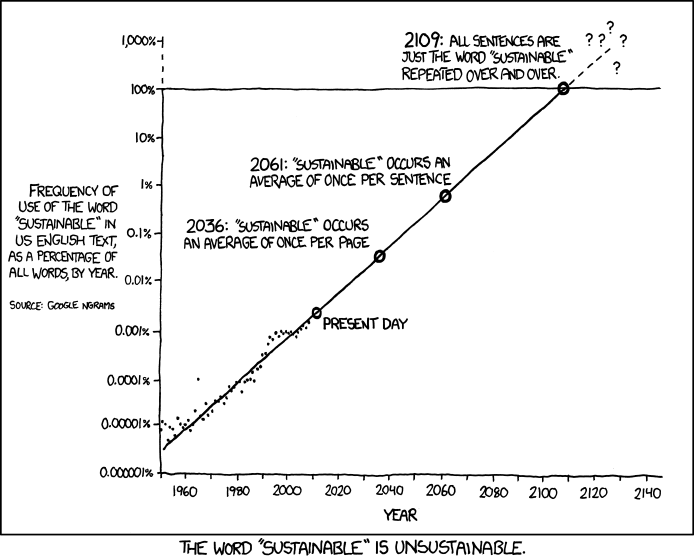
What does it mean to say: “Dirty Oil,” “Clean Energy,” “Renewable,” “Sustainable.”
In the project, he wants to through “Constant critical thinking,” “Challenge the idea that fossil fuels are only bad, and that alternative energies are free and benign and free from resource limits.”
“Unintended Consequences” began as an idea to do a feature film that examines the unintended consequences of different energy sources from oil sands, natural gas, and coal to alternative energy sources like wind, solar, and bio fuels, in order to forge an understanding of the impacts that come from our use of energy. So some of the central conflicts we intend to examine include questions like: how do we or can we reconcile our desire to maintain our standard of living at a time of population growth and increasing energy demand given the finite natural resources available to harness energy and the myriad of unintended consequences (social, political, environmental and economic) that result from our consumption of energy? How can we build a rational, pragmatic and optimistic framework from which to bring man, energy, environment, and technology into harmony?…The goal of the “Unintended Consequences Documentary Project” is to challenge all sides in the global energy debate from energy companies to environmental organizations to consumers to think critically about what we think we know, our assumptions, our biases, and our emotional connections to the issue. – Matt Palmer producer of the Unintended Consequences Documentary Project
Does he mean what he says he wants? So far, few people willingly do the math of alternative energy sources. However, the salt crystal lamp in the background gives me pause because they are complete quackery (according to one site I visited their salt crystal lamps “neutralize the positive ions generated by electrical devices,” thus “give your body the same relaxed feeling you experience when enjoying a day at the beach.”). It’s possibly nothing but a gift from his wife.
In corresponding with Matt Palmer, I recommended two books: Matt Ridley’s, The Rational Optimist and Robert Bryce’s, Power Hungry. He wrote that The Rational Optimist was next on his list. If he could interview Ridley and Bryce, that would be good.
Ridley know numbers, plus he can convey ideas simply. In the foreword of his book he writes, “I find that my disagreement is mostly with reactionaries of all political colours: blue ones who dislike cultural change, red ones who dislike economic change and green ones who dislike technological change…(H)uman progress has, on balance, been a good thing…(The world) is richer, healthier, and kinder too, as much because of commerce as despite it.”
You see, the more we trade goods and services, the more we trade ideas as well. Those ideas “have sex” he says. Like DNA recombining to make unique individuals, bits of ideas cross-fertilize with others to make better ways of doing things. “In a nutshell,” Ridley says, “the most sustainable thing we can do, and the best for the planet, is to accelerate technological change and economic growth.” For instance, changing from using animals to using machines, which need power, for farming freed up 30 percent more land, since machines don’t need pasture. Using petroleum to produce nitrogen fertilizers also freed up land, since with fertilization we require less land to be as productive. That freed land then could be used to grow more food or fiber or returned to its natural state.
Which do you think is better: fossil fuel or alternative energy sources? Why?
These pictures were snapped in August of this year as we were working our way toward Washington, D.C. We were impressed by the lushness of upstate (northern) New York. Delightful sights. Nice people. Can anything compete with the fun of a county fair,the freshness of just-picked corn, the susurrus of a slate-bottomed stream, or shafts of early morning sunlight piercing the mist? (You may click on any picture to get a full-sized photo)