
Happy New Year
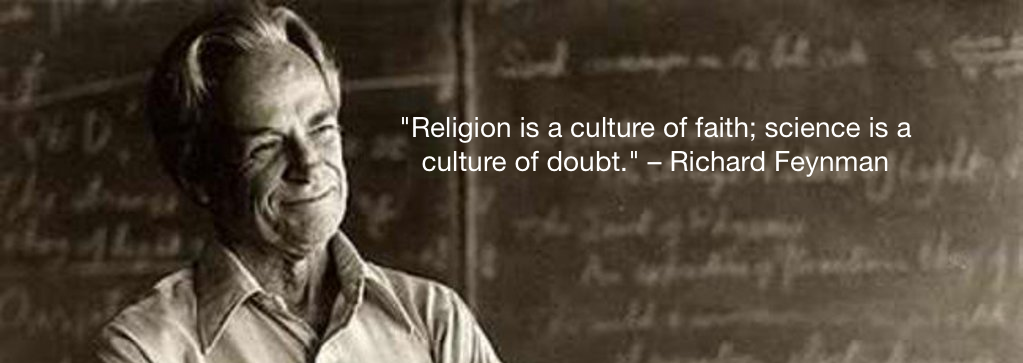
Between Science and Politics Lies the Environment.
Here is my olio list of profound and profane environmental news of the past decade–the aughts.
In Africa, drought continues for the sixth consecutive year, adding terribly to the toll of famine victims. During [this past year] record rains in parts of the U.S., Pakistan and Japan caused some of the worst flooding in centuries.” — Time Magazine, 1972, Science: Another Ice Age?
Conserve energy for conservation’s sake.
Merry Christmas from Timberati
That’s the motion debated (Oxford-style) January 2009 on National Public Radio’s Intelligence Squared. The program runs about 45 minutes and was well worth my time.
FOR THE MOTION:
Peter Huber, co-author of The Bottomless Well and senior fellow at the Manhattan Institute.
Bjorn Lomborg, creator of the Copenhagen Consensus
Philip Stott, biogeographer and the editor of the Journal of Biogeography for 18 years.
AGAINST THE MOTION
L. Hunter Lovins, president of Natural Capitalism Solutions
Oliver Tickell, author of Kyoto2
Adam Werbach, global chief executive officer at Saatchi & Saatchi. He is the youngest president ever elected for the Sierra Club.
You can hear the debate on this media player:

This was written by Bill Keye, Government Affairs Specialist for the California Licensed Foresters Association.
On a scale not seen since the Great Depression, unemployment and underemployment continue to grind away at California and the United States. 27 years ago, in November, 1982, the unemployment rate in the Golden State hit 11.0%. It hung around that level for several months, and then began to drop. It never touched those heights again, until 2009.
This year, we’ve already hit 12.2% and may well exceed 13% in 2010. California is worse off than most states this time around, a couple of points above the national level.
In forestry, we’ve seen mills shut, colleagues (or ourselves) laid off, Main Street businesses wither away.
The Board of Equalization (BOE) reports that in 2008, timber harvest in California was only 1.37 billion board-feet, very likely the lowest since – you already know – the Great Depression. Actually, timber harvest levels may even have been higher during the Depression because California’s current habit of importing most of our wood is a recent phenomenon.
When the BOE updates their state harvest stats next year, it seems predictable that the figures for 2009 will be even more depressing.
So we’re slogging through unsettling darkness, the grinding all around us. A chewing up and rearranging of economic tectonic plates, communities and human lives.
Still the trees grow. It’s helpful for me to remind myself that even during the Great Depression, when bitter hardship and dislocation were rife, very few Americans starved to death.
This puts things into perspective. We’re still a wealthy country and an especially wealthy state despite our self-inflicted difficulties.
Ever present is the challenge of using our vast forest resources for something closer to Gifford Pinchot’s “greatest good.” This year, our California legislature actually passed a bill that does something nice for California forestry: AB 1066 (Mendoza). That, in itself, is pretty amazing.
High unemployment has a profound effect on policy makers, even in eco-arrogant California.
AB 1066, although not a major bill, is still symbolic. It means more than just the resurrection of a few expired THPs. AB 1066’s legislative success may portend something bigger, a growing recognition of the full importance of our renewable natural resources, including extractive uses that physically sustain people.
Sustainable forestry, of course, could employ many thousands more people in California than it currently does, helping to spur economic recovery. We can sequester more carbon, spark more electricity, support more families and cut pollution by importing less wood and curbing wildfires.
We can also plant more trees, fix roads and build trails, improve habitat and so forth. Actually touch the land and feel its goodness. And still revel in California’s Golden beauty.
In our current darkness, there is light. Foresters have solutions.
Reprinted by permission from the California Licensed Foresters Association Update newsletter, November, 2009
The sawyer at a lumber mill.
The sawyer at a lumber mill.
A while ago I asked, “What’s wrong with this picture of two women planting a tree?”
The tree planting is part of an Odwalla promotion. Odwalla is donating $1 per click toward the purchase of trees for planting in a state parks in one of eleven states (including California). I’d like to see them expand their horizons, still it’s a noble effort.
However, if the trees are planted as shown in the picture I would guess that no trees will survive a year.
Why? Because, they’re planting in dry soil on a warm day. Seedlings like cool and moist. A drizzly day in early spring with snow still in places is nearly ideal.
Policymakers must address the influence of global deforestation and urbanization on climate change, in addition to reducing greenhouse gas emissions, according to Georgia Tech’s City and Regional Planning Professor Brian Stone in an upcoming paper to be published in the December edition of Environmental Science and Technology.
“The role of land use in global warming is the most important climate-related story that has not been widely covered in the media. ”… “Across the U.S. as a whole, approximately 50 percent of the warming that has occurred since 1950 is due to land use changes (usually in the form of clearing forest for crops or cities) rather than to the emission of greenhouse gases,” said Stone. “Most large U.S. cities, including Atlanta, are warming at more than twice the rate of the planet as a whole – a rate that is mostly attributable to land use change. As a result, emissions reduction programs – like the cap and trade program under consideration by the U.S. Congress – may not sufficiently slow climate change in large cities where most people live and where land use change is the dominant driver of warming.”
According to Stone’s research, slowing the rate of forest loss around the world, and regenerating forests where lost, could significantly slow the pace of global warming.
Stone recommends slowing what he terms the “green loss effect” through the planting of millions of trees in urbanized areas and through the protection and regeneration of global forests outside of urbanized regions. Forested areas provide the combined benefits of directly cooling the atmosphere and of absorbing greenhouse gases, leading to additional cooling. Green architecture in cities, including green roofs and more highly reflective construction materials, would further contribute to a slowing of warming rates. Stone envisions local and state governments taking the lead in addressing the land use drivers of climate change, while the federal government takes the lead in implementing carbon reduction initiatives, like cap and trade programs.
“As we look to address the climate change issue from a land use perspective, there is a huge opportunity for local and state governments,” said Stone. “Presently, local government capacity is largely unharnessed in climate management structures under consideration by the U.S. Congress. Yet local governments possess extensive powers to manage the land use activities in both the urban and rural areas.”
For More Information Contact David Terraso with Georgia Tech Communications and Marketing (404-385-2966)
My thanks to Watts Up With That.
Does buying soft toilet paper really threaten the environment?
The blogosphere overflows with hyperbole saying it does. “Americans Wipe Their Butts with Non-Renewable Trees,”1 one site trumpeted. Another gushed, “Use recycled toilet paper and paper towels and reduce the demand of destroying virgin forests!”2 I’m sure she meant toilet paper made from recycled paper rather than already-used TP, but despite the fractured syntax her conviction was clear.
The great toilet paper debate has rolled to the frontlines of the mainstream media. Radio, television, and print outlets3 have all reported on the contested consequences of choosing softness over recycled brands.
Everyone quotes Dr. Allen Hershkowitz,4 the Natural Resources Defense Council’s expert on waste, who stated, “People just don’t understand that softness equals ecological destruction.”5 Peabody Award winning journalist John Hockenberry agrees, using typical American toilet paper has “enormous environmental consequences.” 6
Opposing arguments are also awash in over-the-top wording, but generally boil down to: “You can have these super-soft rolls when you pry them from our cold, dead hands! Hooray for Free Market Capitalism; we’ll wipe our pampered tushes with spotted owls if we want to because we can afford it!”
Thus is the debate framed: John Muir versus Adam Smith, environmentalism versus capitalism. Which are we to believe: the recycled-choice set which sounds like a public radio pledge-drive striving to guilt people into changing or the plush-choice side which relies on less-than-perfect market systems to rein in excesses? Neither, we need facts, not a conflated mish-mash of hearsay.
Here are some points to consider:
The production of our paper has changed only in speed and scope from its beginnings two thousand years ago in China: make a cellulosic slurry by dissolving the wood’s lignin and hemicellulose binding the wood’s fibers, rinse, spread the pulpy mush over a framed mesh to drain, and dry. 7 The Chinese also invented toilet paper about one thousand years later.8
We don’t use filet mignon for generic dog food and timber companies don’t use tight grained, knot free wood for low-profit ends. While environmentalists conjure pictures of paper companies hewing virgin forests with majestic trees and then chipping the logs directly into toilet paper, such is not the case. Fully half of the raw material for paper manufacturing comes from mill scraps—sawdust and end pieces that would otherwise be burned or dumped.
So even though the chips used for pulping may come from an older tree, the tree itself was not harvested expressly for paper, its wood went into furniture and dimension lumber. Then the mill sold its waste scraps and sawdust in a secondary market. When the choice for the outcome for this waste sifts down to landfill, burning, converting to ethanol, composting (all which release greenhouse gasses into the atmosphere) or pulping the waste into paper (which binds the cellulose fibers), the choice seems obvious. These scraps have desirable fiber lengths for the pulping process.
Fiber length is an issue because longer fibers make softer paper. Old-growth fiber is not necessarily longer than young-growth. Wood fiber length varies by species and the location on the tree.9 How far the tracheid (fiber) occurs from the center pith and whether it is above or below midway up the tree affects length. Species matters too: A 25-year-old Pinus caribaea has longer fibers (2.34 mm average length)10 than a 50-year-old Eucalyptus regnans (0.80mm average fiber length)11.
There is a tendency in the news stories to label second-growth stands established in the 1950’s or 1960’s as “old-growth” because the trees happen to be past an average American’s middle-age. You can see the tendency in the Washington Post piece, “… trees that were decades or even a century [old].”12 To a forester, thinking a quarter-century ahead constitutes short-term planning.
Though what ‘old-growth’ is is a matter of debate, analogous to US Supreme Court Justice Stewart Potter’s definition of pornography as: “I know when I see it.” There is consensus that old-growth refers to a forest stand’s structure and characteristics.13 The University of California’s Cooperative Extension’s definition is: “Trees that have been growing for such a long time that net growth or value is often declining.”14
I applaud the environmental community for heralding the need to curb the demand side of the supply-demand equation. We Americans consume three times as much wood per capita than the world average, we use one-third more paper than the average European, and much of the wood we use is imported. And while the U.S. may lead the paper pack, the rest of the world is at our heels.15
But toilet tissue is the wrong target because only about five percent of our total paper consumption is for toilet paper—about forty pounds per person per year. The remaining 760 pounds per person per year includes packaging, office supplies, books, newspapers, and magazines. 16
One place to cut down is in office use. Due to computers and fast printers, America’s paper consumption skyrocketed from 4.2 million tons to 7 million tons in just three years alone between 1981 and 1984. 17 Obviously, creating fewer copies for distribution in offices will make a greater contribution to lowering our consumption than changing brands of toilet paper.
Finally, much of the toilet paper consumed in the U.S. is for institutional use, and therefore is already from recycled paper (it’s the least expensive). Given all those clarifications, the argument devolves into niggling fussiness.
The purpose for the great TP debate may not be the health of the environment, but rather to make you reach for your wallet using the “destruction” of old-growth as the stick. In 2001, Tom Knudson wrote a series in the Sacramento Bee called Environment, Inc., “Competition [among environmental groups] for money and members is keen…Crisis, real or not, is a commodity. And slogans and sound bites masquerade as scientific fact.” Without a crisis to scare you, they don’t stay in business.
As a forester, I support conserving trees, but I also support using trees. With four decades in the field, I have marked trees for harvest, have seen them cut down, and have planted seedlings in their place. I have watched those seedlings grow more than sixty feet on their way to becoming three or four times that height. Bottom line: Forests replenish with proper stewardship, even slow-growing ones such as Canada’s northern boreal forests.
Let’s manage forests in accordance with scientific principles, not fear, guilt, or romanticism. Our goal must be sustainability and balance. That discussion might be had when we possess the facts. Unfortunately, facts don’t seem to stop this debate, rather than discussing a realistic balance point and how to stay there, we squabble over the non-consequential. Environmentalists should not emulate fundamentalists who only have “no” for an answer.
To learn what to say yes to, I recommend “Natural Capitalism – Creating the Next Industrial Revolution,” by Paul Hawken, Amory Lovins, and L. Hunter Lovins. They show how environmental conscience and business sense can work together for a cleaner, greener future.
So change to toilet paper using recycled materials if you wish, but do not think that this choice will slow deforestation. Weigh the arguments critically, looking for those misuses of terms and concepts.
Norm Benson is a Licensed Forester living north of San Francisco. He uses Costco’s store-brand toilet paper.
[1] Gutierrez, David. “Americans Wipe Their Butts with Non-Renewable Trees,” Natural News Website, July 15, 2009, http://www.naturalnews.com/026627_paper_toilet_paper_forests.html (accessed November 19, 2009)
[2] Lindo, Nancy. “Daily Green Living Tips,” The Green Girls Website, March 24, 2009, http://www.thegreengirls.com/blog/post/2009/03/DAILY-GREEN-LIVING-TIPS.aspx (accessed November 19, 2009)
[3] Fahrenthold, David. “Environmentalists Seek to Wipe Out Plush Toilet Paper, Soft Toilet Paper’s Hard on the Earth, But Will We Sit for the Alternative?” Washington Post Website, September 24, 2009, http://www.washingtonpost.com/wpdyn/content/article/2009/09/23/AR2009092304711.html (accessed November 21, 2009)
Kaufmann, Leslie. “Mr. Whipple Left It Out: Soft Is Rough on Forests,” New York Times Website, February 25, 2009, http://www.nytimes.com/2009/02/26/science/earth/26charmin.html?_r=1&em (accessed November 19, 2009)
[4] Hershkowitz, Allen. “Will recycled fiber toilet paper become the next compact fluorescent light bulb?” Natural Resources Defense Council Website, February 27, 2009, http://switchboard.nrdc.org/blogs/ahershkowitz/will_recycled_fiber_toilet_pap.html (accessed November 19, 2009)
[5] Goldenberg, Suzanne. “American taste for soft toilet roll ‘worse than driving Hummers’,” Guardian UK Website, February 26, 2009, http://www.guardian.co.uk/environment/2009/feb/26/toilet-roll-america (accessed November 19, 2009)
[6] Hockenberry John. “Americans won’t stop squeezing the Charmin, despite the environmental impact,” The Takeaway [Podcast], February 26, 2009, http://www.thetakeaway.org/stories/2009/feb/26/americans-wont-stop-squeezing-charmin-despite-environmental-impact/ (accessed November 19, 2009)
[7] Hawken, Paul, Amory Lovins, and L. Hunter Lovins, 1999. “Natural Capitalism – Creating the Next Industrial Revolution.”
[8] “The Paper Project” (http://paperproject.org/paperfacts.html)
[9] Panshin, A. J. and C. De Zeeuw, 1970. “Textbook of wood Technology Volume 1.” Pp 164-245
[10] Oluwafemi, O. A. 2007. “Wood Properties and Selection for Rotation Length in Caribbean Pine (Pinus caribaea Morclet) Grown in Afaka, Nigeria.” pp 350-362
[11] Panshin, A. J. and C. De Zeeuw, 1970. “Textbook of wood Technology Volume 1.” Pp 164-245
[12] Fahrenthold, David. “Environmentalists Seek to Wipe Out Plush Toilet Paper, Soft Toilet Paper’s Hard on the Earth, But Will We Sit for the Alternative?” Washington Post Website, September 24, 2009, http://www.washingtonpost.com/wpdyn/content/article/2009/09/23/AR2009092304711.html (accessed November 19, 2009)
[13] The UN’s Forest and Agriculture Organization has only a list of characteristics that vary between forest types. See “Old-growth forests in Canada – a science perspective.” http://www.fao.org/docrep/article/wfc/xii/0042-b1.htm
[14] UC Extension
[15] Hawken, Paul, Amory Lovins, and L. Hunter Lovins, 1999. “Natural Capitalism – Creating the Next Industrial Revolution.”
[16] “The Paper Project” (http://paperproject.org/paperfacts.html)
[17] Hawken, Paul, Amory Lovins, and L. Hunter Lovins, 1999. “Natural Capitalism – Creating the Next Industrial Revolution.”
 Nullius in Verba