Six word memoirs and summations are popular, I tried my hand at my career.
Forester: cuts trees, plants and leaves.
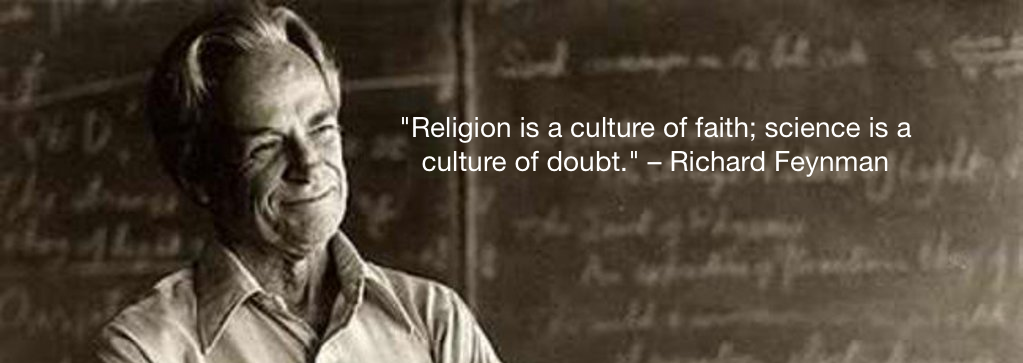
Between Science and Politics Lies the Environment.
Six word memoirs and summations are popular, I tried my hand at my career.
Forester: cuts trees, plants and leaves.
“If you don’t have the law, you argue the facts; if you don’t have the facts, you argue the law; if you have neither the facts nor the law, then you argue the Constitution” – John Adams

On January 27, the Center for Biological Diversity (CBD), a Tucson-based environmental advocacy group, filed suit against my former employer.
The California Department of Forestry and Fire Protection (Cal Fire) regulates harvesting on California’s non-federal forests. Oddly, CBD isn’t claiming clearcutting 5,000 acres (none of harvest areas are greater than 40 acres[1]) disrupts habitat and thus endangers plants and animals. No, they’ve filed suit because clearcutting, ostensibly, increases global warming. “A clearcut is about as beneficial to the climate as a new coal-fired power plant,” says Brian Nowicki, CBD’s California climate policy director. At issue is whether Cal Fire “failed to carry out any project-specific analysis of the (greenhouse gas) emissions that would come from clearcutting projects it approved.”
“A clearcut is about as beneficial to the climate as a new coal-fired power plant “– Brian” Nowicki, CBD’s California climate policy director
Forests do a good job of soaking up carbon dioxide (CO2), a “greenhouse gas.” When harvesting removes the trees, some of the carbon in the soil, branches, litter, and leaves, escapes back into the atmosphere. It may be more than normal but it’s normal. Forests constantly exchange carbon, pulling CO2 from the air and putting it back through respiration. One textbook I consulted said of a normal forest, “Measurements have shown as much as 20 pounds [of CO2] per acre per hour being liberated from soil.”
The FAO (Food and Agriculture Organization of the United Nations) estimates 80% of the terrestrially exchanged carbon is done by forests. California’s forests pull more than 14 million metric tons (MMT) of CO2 annually from the atmosphere. “Most foresters I talk to feel the 14 million metric tons gross sequestration [the incorporation of carbon into the tree] rate is an underestimate,” said Gary Nakamura, Forestry Specialist for University of California, Berkeley’s Center for Forestry and a member of the California Board of Forestry.
Fires, harvesting, insect kill, disease, and the decomposition of forest products in landfills and composting facilities, return about 10 MMT back to the atmosphere. The numbers squish when squeezed. “The uncertainty in this estimate is roughly ± 38%,” Nakamura said in an email.
While the numbers aren’t certain, CBD is. They’ve defeated others before on this issue. They may win again, despite the science, the facts, or the law; never mind the constitution. “It’s part of an ongoing philosophical struggle between the forces of preservation and the forces of conservation,” Bill Keye, Government Affairs Specialist for the California Licensed Foresters Association (CLFA) told me. “They’ve shut down national forests, now they’ve branched out to private ownerships. They don’t like even-aged management [i.e. clearcutting] and they don’t like us [the forest industry].”
“It’s part of an ongoing philosophical struggle between the forces of preservation and the forces of conservation. They’ve shut down national forests, now they’ve branched out to private ownerships. They don’t like even-aged management and they don’t like us.” – Bill Keye, Government Affairs Specialist for the California Licensed Foresters Association
“Clear-cutting is an abysmal practice that should have been banned long ago due to its impacts on wildlife and water quality,” CBD’s Senior Counsel, Brendan Cummings said in a statement. “Now, in an era where all land-management decisions need to be fully carbon-conscious, there is simply no excuse to continue to allow clear-cutting in California.”
“Now, in an era where all land-management decisions need to be fully carbon-conscious, there is simply no excuse to continue to allow clear-cutting in California.” – CBD Senior Counsel, Brendan Cummings
Yet if we want to keep a healthy mix of trees, there’s not only an excuse to allow clearcutting, there’s a place for clearcutting. Every gardener knows some plants work best in shade and some thrive in full sunlight. The same holds for trees. Some trees, such as ponderosa pine and Douglas-fir, do best in full sunlight. Other trees grow in shaded conditions.
Foresters prescribe clearcutting in order to be able to plant trees that are intolerant to shade. Selection cutting shifts the species mix toward shade-tolerant trees because the ones needing full sunlight won’t be able to compete and will get crowded out. Without major stand disturbance such as fire, logging, or extensive windthrow to create those openings, trees such as ponderosa and Douglas-fir won’t have the conditions they need to survive and will be shaded out.
So, if the desired future is to have ponderosa pines or Douglas-firs in our forests, clearcuts beat selection harvests. The only argument should be over the size of the openings allowed, and after the biological needs of a species are met, it’s a matter of policy. California’s regulations restrict clearcut size to 20-40 acres, the smallest openings allowed in the western United States.
However well-intentioned lawsuits such as CBD’s latest against Cal Fire are, they have the power to cause unintended consequences. If Bill Keye is right and CBD’s goal is to end all harvesting, the result is far more pollution, not simply more CO2; results CBD contends they are trying to prevent.
““When the search for truth is confused with political advocacy, the pursuit of knowledge is reduced to the quest for power.”“- Alston Chase, author of “Playing God in Yellowstone.”
Such lawsuits hold the power to shift people away from California’s renewable second-growth forests, and the wood they provide, to non-renewable resources and their more energy-intensive requirements; or perhaps worse, shifting to sources where environmental policies carry little regard. “When the search for truth is confused with political advocacy,” said Alston Chase, author and former philosophy professor, “the pursuit of knowledge is reduced to the quest for power.”
Never mind the metaphorical coal-fired power plant, real coal-fired power plants will be running harder to create products from substitutes, such as concrete, steel and aluminum. These substitutes require more energy to explore, excavate, smelt, and manufacture.
Our California forests have the capacity to produce all the wood we need and export some as well, yet we import 75% of our wood. And, when we do buy wood, it may not be from places that carefully scrutinize harvests. It’s Kabuki environmentalism and the “zero-cut,” illusion of preservation, getting wood from countries with lax environmental enforcement.
The lawsuit seems to be classic NIMBYism: “think locally, pollute globally.”
—————————————————
[1] 40 acres is the maximum clearcut size allowed by the Forest Practice Rules
Recently, Barnes and Noble launched its own e-book reader, the “Nook,” to compete with the Amazon Kindle.[i] E-readers are handy electronic devices, they can hold hundreds of books, and use an ‘electronic paper.’ They have been heralded as alternatives to ‘dead-tree publishing.’
Without doubt, digital technology improves lives. Consider mobile phones: once isolated African fishermen now connect and locate the best markets for their catch. As a result, spoilage has decreased, fishermen make more money, and consumers pay less.[ii] “Mobile phones have been described as ‘the single most effective tool to promote development,’” says Tom Standage of The Economist magazine.[iii] In the same way, e-readers might save America’s forests to absorb CO2.[iv] [v]
Substituting plastic for paper reminds me of a movie where a character complains of a headache. His friend, a tough-as-nails soldier, smiles. “Let me show you a trick,” he says. The soldier breaks his friend’s finger. The pain of a broken finger trumps a headache. Problem solved.
Nothing comes without cost. Manufacturing and disposing of electronics can harm the environment more than the harvest of a thousand trees. There’s another carbon footprint to consider besides CO2: CN—cyanide.
Raw materials for electronics don’t spring from the ground in the same way trees do for books. “If it’s not grown, it has to be mined,” says resource geologist Sarah Andrews and author of the “Em Hansen” mysteries.[vi]
“These are not your grandfather’s mines,” says Robert Moran, PhD., an expert in geochemistry.[vii] Moran’s company, Michael-Moran Associates, has commented extensively on the environmental impacts of mining projects around the world for both the mining industry and for environmental activists. Mines are “constructed on a huge scale unheard of less than thirty years ago.”[viii]
And the reason there are open-pit mines, “2,000 feet deep, and one to two miles across,” is our appetite for stuff. Each year, the average American consumes 23 tons of mineral products.[ix] By supplanting paper with technology, we stop growing, harvesting, and planting trees and start digging and drilling for metals, toxic chemicals, and petroleum products. “Welcome to my world,” Andrews said.
It’s a dangerous world filled with explosives, Bunyanesque machines, and hazrdous materials. Industrial extraction uses cyanide compounds to separate metals from the ore.[x] And, though U.S. mines pollute less than others around the world, hard-rock mining produces more toxic waste than any other industry in the country.[xi] For example, one ounce of refined gold generates nearly 80 tons of toxic waste. The leftovers are akin to nuclear waste for the mining industry: around for a long time, hazardous, and no one really knows what to do with it. The waste contains “every element in the periodic table,” said Dr. Moran.
Printed texts from the eighth century still exist[xii] while electronics break, wear out, or, more often, become obsolete. When reusing isn’t possible, the choice becomes disposing or recycling.
Discarded electronics account for 70% of the overall toxic waste currently found in landfills, by some accounts. Americans pitch a computer and three mobile phones every second.[xiii] California’s waste stream sees 480-thousand tons of junked electronic goods each year.[xiv]
Electronics recycling is not wholly benign. American recyclers continue to dump our unwanted electronics on developing countries. Often, the metal recovery poses health and safety risks for workers and pollutes our environment:[xv] burning plastics and using toxic chemicals—sodium cyanide; nitric, hydrochloric, and sulfuric acids—to extract the metals.
Obviously, technology is not going away. Nor should it. But changes need to happen. Perhaps there should be a haz-mat disposal charge assessment for all products. Europe and Japan have passed laws that require electronic manufacturers to take back their products for recycling. [xvi] The law has caused manufacturers to rethink design with an eye toward ease of disassembly and reuse.
Bottom line: Forests return [xvii] . Plastics and cyanide dumps don’t go away. Instead of saving trees for our descendants, we’re leaving tons of toxic wastes and despoiled landscapes where trees may not grow for millennia.
If you still think sustainable forestry is a bad idea, give me your finger; let me show you a trick.
[ii] Standage, Tom. “Telecoms in emerging markets,” The Economist website, September, 2009, http://bit.ly/8NCAYd (accessed December 4, 2009)
[iii] Standage, Tom. “Telecoms in emerging markets,” The Economist website, September, 2009, http://bit.ly/8NCAYd (accessed December 4, 2009)
[iv] Yardley, William. “Protecting the Forests, and Hoping for Payback,” New York Times Website, November 28, 2009, http://bit.ly/6N5t46 (accessed December 4, 2009)
[v] Sibley, Lisa. August 19, 2009. “Cleantech Group report: E-readers a win for carbon emissions.” http://cleantech.com/news/4867/cleantech-group-finds-positive-envi
[vi] Personal conversation
[vii] Moran, Robert E. 2007. “Pebble Mine: Hydrogeology and Geochemistry Issues.”
[viii] Personal conversation
[ix] Mostly as rock used for roads and other construction according to the Mineral Information Institute.
[x] Moran, Robert E. “Cyanide In Mining: Some Observations On The Chemistry, Toxicity And Analysis Of Mining-Related Waters.” http://earthworksaction.org/pubs/Cyanide_Leach_Packet.pdf
[xi] According to the Environmental Protection Agency
[xii] Rocca, Mo. “The Future of Paper.” The Tomorrow Show, CBS (http://bit.ly/4xxzIZ) accessed December 5, 2009
[xiii] http://www.cbsnews.com/stories/2008/11/06/60minutes/main4579229.shtml “”Well, we throw out about 130,000 computers every day in the United States.” And he said over 100 million cell phones are thrown out annually.
[xiv] Cascadia Consulting Group, Inc. 2004“Executive Summary [to CIWMB] – Statewide Waste Characterization Study (http://www.ciwmb.ca.gov/Publications/default.asp?pubid=1097)
[xv] The Economist Jun 7th 2007, “The truth about recycling”
[xvi] The Economist Jun 7th 2007, “The truth about recycling”
[xvii]The functional forest, especially a quick-growing, well-managed one compensates for the pollution through sequestering carbon and protecting watersheds. And all along, gainful employment is made available in forests for people making tough decisions; it’s not easy to be green.
Recently, Barnes and Noble launched its own e-book reader, the “Nook,” to compete with the Amazon Kindle.[i] E-readers are handy electronic devices, they can hold hundreds of books, and use an ‘electronic paper.’ They have been heralded as alternatives to ‘dead-tree publishing.’
Without doubt, digital technology improves lives. Consider mobile phones: once isolated African fishermen now connect and locate the best markets for their catch. As a result, spoilage has decreased, fishermen make more money, and consumers pay less.[ii] “Mobile phones have been described as ‘the single most effective tool to promote development,’” says Tom Standage of The Economist magazine.[iii] In the same way, e-readers might save America’s forests to absorb CO2.[iv] [v]
Substituting plastic for paper reminds me of a movie where a character complains of a headache. His friend, a tough-as-nails soldier, smiles. “Let me show you a trick,” he says. The soldier breaks his friend’s finger. The pain of a broken finger trumps a headache. Problem solved.
Nothing comes without cost. Manufacturing and disposing of electronics can harm the environment more than the harvest of a thousand trees. There’s another carbon footprint to consider besides CO2: CN—cyanide.
Raw materials for electronics don’t spring from the ground in the same way trees do for books. “If it’s not grown, it has to be mined,” says resource geologist Sarah Andrews and author of the “Em Hansen” mysteries.[vi]
“These are not your grandfather’s mines,” says Robert Moran, PhD., an expert in geochemistry.[vii] Moran’s company, Michael-Moran Associates, has commented extensively on the environmental impacts of mining projects around the world for both the mining industry and for environmental activists. Mines are “constructed on a huge scale unheard of less than thirty years ago.”[viii]
And the reason there are open-pit mines, “2,000 feet deep, and one to two miles across,” is our appetite for stuff. Each year, the average American consumes 23 tons of mineral products.[ix] By supplanting paper with technology, we stop growing, harvesting, and planting trees and start digging and drilling for metals, toxic chemicals, and petroleum products. “Welcome to my world,” Andrews said.
It’s a dangerous world filled with explosives, Bunyanesque machines, and hazrdous materials. Industrial extraction uses cyanide compounds to separate metals from the ore.[x] And, though U.S. mines pollute less than others around the world, hard-rock mining produces more toxic waste than any other industry in the country.[xi] For example, one ounce of refined gold generates nearly 80 tons of toxic waste. The leftovers are akin to nuclear waste for the mining industry: around for a long time, hazardous, and no one really knows what to do with it. The waste contains “every element in the periodic table,” said Dr. Moran.
Printed texts from the eighth century still exist[xii] while electronics break, wear out, or, more often, become obsolete. When reusing isn’t possible, the choice becomes disposing or recycling.
Discarded electronics account for 70% of the overall toxic waste currently found in landfills, by some accounts. Americans pitch a computer and three mobile phones every second.[xiii] California’s waste stream sees 480-thousand tons of junked electronic goods each year.[xiv]
Electronics recycling is not wholly benign. American recyclers continue to dump our unwanted electronics on developing countries. Often, the metal recovery poses health and safety risks for workers and pollutes our environment:[xv] burning plastics and using toxic chemicals—sodium cyanide; nitric, hydrochloric, and sulfuric acids—to extract the metals.
Obviously, technology is not going away. Nor should it. But changes need to happen. Perhaps there should be a haz-mat disposal charge assessment for all products. Europe and Japan have passed laws that require electronic manufacturers to take back their products for recycling. [xvi] The law has caused manufacturers to rethink design with an eye toward ease of disassembly and reuse.
Bottom line: Forests return [xvii] . Plastics and cyanide dumps don’t go away. Instead of saving trees for our descendants, we’re leaving tons of toxic wastes and despoiled landscapes where trees may not grow for millennia.
If you still think sustainable forestry is a bad idea, give me your finger; let me show you a trick.
[ii] Standage, Tom. “Telecoms in emerging markets,” The Economist website, September, 2009, http://bit.ly/8NCAYd (accessed December 4, 2009)
[iii] Standage, Tom. “Telecoms in emerging markets,” The Economist website, September, 2009, http://bit.ly/8NCAYd (accessed December 4, 2009)
[iv] Yardley, William. “Protecting the Forests, and Hoping for Payback,” New York Times Website, November 28, 2009, http://bit.ly/6N5t46 (accessed December 4, 2009)
[v] Sibley, Lisa. August 19, 2009. “Cleantech Group report: E-readers a win for carbon emissions.” http://cleantech.com/news/4867/cleantech-group-finds-positive-envi
[vi] Personal conversation
[vii] Moran, Robert E. 2007. “Pebble Mine: Hydrogeology and Geochemistry Issues.”
[viii] Personal conversation
[ix] Mostly as rock used for roads and other construction according to the Mineral Information Institute.
[x] Moran, Robert E. “Cyanide In Mining: Some Observations On The Chemistry, Toxicity And Analysis Of Mining-Related Waters.” http://earthworksaction.org/pubs/Cyanide_Leach_Packet.pdf
[xi] According to the Environmental Protection Agency
[xii] Rocca, Mo. “The Future of Paper.” The Tomorrow Show, CBS (http://bit.ly/4xxzIZ) accessed December 5, 2009
[xiii] http://www.cbsnews.com/stories/2008/11/06/60minutes/main4579229.shtml “”Well, we throw out about 130,000 computers every day in the United States.” And he said over 100 million cell phones are thrown out annually.
[xiv] Cascadia Consulting Group, Inc. 2004“Executive Summary [to CIWMB] – Statewide Waste Characterization Study (http://www.ciwmb.ca.gov/Publications/default.asp?pubid=1097)
[xv] The Economist Jun 7th 2007, “The truth about recycling”
[xvi] The Economist Jun 7th 2007, “The truth about recycling”
[xvii]The functional forest, especially a quick-growing, well-managed one compensates for the pollution through sequestering carbon and protecting watersheds. And all along, gainful employment is made available in forests for people making tough decisions; it’s not easy to be green.
As a child of the 1960’s On April 22, 1970, I, along with 20 million others that day, attended one of the first Earth Day celebrations. We had heard the predictions and we were duly frightened. In those days, most of us in the environmental movement worried about air pollution causing another ice age through global cooling. Many doomsayers proclaimed Malthus—an eighteenth century economist who argued that human population which grew exponentially would quickly outstrip crop yields which grew arithmetically—was a Pollyanna. We stood on the brink of drought and mass starvation; no oil, forests reduced to stumps, foul air, frozen and polluted water. None of that has happened in the past 40 years, perhaps because we made the necessary changes.
It’s because of this looking back that I’m an optimistic environmentalist. The lake is half-full. Though problems do exist, we have hope. We mustn’t squander resources. Yet, I side with Julian Simon. “First, humanity’s condition will improve in just about every material way,” the late economist said. “Second, humans will continue to sit around complaining about everything getting worse.” Such thinking that everything is worsening elicits a siege mentality where we either shut down because we want no more bad news or we feel imperiled.
Those who feel imperiled bang pans, beseeching us to repent and turn away from our profligate ways; Lester Brown—the rightly-renown environmentalist and founder of Worldwatch Institute and Earth Policy Institute—is one. He writes of climate change, “Researchers…believe that global warming is accelerating and may be approaching a tipping point…” Brothers and sisters the end is near and we stand upon banana peels between vipers and the abyss. We stand on the brink of droughts and mass starvation; forests reduced to stumps, no oil, foul air, frozen and polluted water.
Let’s recap for those keeping score at home, it’s “The Pollyannas”-7, “Malthus and the Prophets of Doom”-0.
Well Malthus and the prophets of doom will continue to say as Bullwinkle J. Moose used to say, “This time for sure.”

Here is my olio list of profound and profane environmental news of the past decade–the aughts.
In Africa, drought continues for the sixth consecutive year, adding terribly to the toll of famine victims. During [this past year] record rains in parts of the U.S., Pakistan and Japan caused some of the worst flooding in centuries.” — Time Magazine, 1972, Science: Another Ice Age?
Conserve energy for conservation’s sake.
Merry Christmas from Timberati
That’s the motion debated (Oxford-style) January 2009 on National Public Radio’s Intelligence Squared. The program runs about 45 minutes and was well worth my time.
FOR THE MOTION:
Peter Huber, co-author of The Bottomless Well and senior fellow at the Manhattan Institute.
Bjorn Lomborg, creator of the Copenhagen Consensus
Philip Stott, biogeographer and the editor of the Journal of Biogeography for 18 years.
AGAINST THE MOTION
L. Hunter Lovins, president of Natural Capitalism Solutions
Oliver Tickell, author of Kyoto2
Adam Werbach, global chief executive officer at Saatchi & Saatchi. He is the youngest president ever elected for the Sierra Club.
You can hear the debate on this media player:

This was written by Bill Keye, Government Affairs Specialist for the California Licensed Foresters Association.
On a scale not seen since the Great Depression, unemployment and underemployment continue to grind away at California and the United States. 27 years ago, in November, 1982, the unemployment rate in the Golden State hit 11.0%. It hung around that level for several months, and then began to drop. It never touched those heights again, until 2009.
This year, we’ve already hit 12.2% and may well exceed 13% in 2010. California is worse off than most states this time around, a couple of points above the national level.
In forestry, we’ve seen mills shut, colleagues (or ourselves) laid off, Main Street businesses wither away.
The Board of Equalization (BOE) reports that in 2008, timber harvest in California was only 1.37 billion board-feet, very likely the lowest since – you already know – the Great Depression. Actually, timber harvest levels may even have been higher during the Depression because California’s current habit of importing most of our wood is a recent phenomenon.
When the BOE updates their state harvest stats next year, it seems predictable that the figures for 2009 will be even more depressing.
So we’re slogging through unsettling darkness, the grinding all around us. A chewing up and rearranging of economic tectonic plates, communities and human lives.
Still the trees grow. It’s helpful for me to remind myself that even during the Great Depression, when bitter hardship and dislocation were rife, very few Americans starved to death.
This puts things into perspective. We’re still a wealthy country and an especially wealthy state despite our self-inflicted difficulties.
Ever present is the challenge of using our vast forest resources for something closer to Gifford Pinchot’s “greatest good.” This year, our California legislature actually passed a bill that does something nice for California forestry: AB 1066 (Mendoza). That, in itself, is pretty amazing.
High unemployment has a profound effect on policy makers, even in eco-arrogant California.
AB 1066, although not a major bill, is still symbolic. It means more than just the resurrection of a few expired THPs. AB 1066’s legislative success may portend something bigger, a growing recognition of the full importance of our renewable natural resources, including extractive uses that physically sustain people.
Sustainable forestry, of course, could employ many thousands more people in California than it currently does, helping to spur economic recovery. We can sequester more carbon, spark more electricity, support more families and cut pollution by importing less wood and curbing wildfires.
We can also plant more trees, fix roads and build trails, improve habitat and so forth. Actually touch the land and feel its goodness. And still revel in California’s Golden beauty.
In our current darkness, there is light. Foresters have solutions.
Reprinted by permission from the California Licensed Foresters Association Update newsletter, November, 2009
 Nullius in Verba