“We Californians are really not very good conservationists – we’re very good preservationists. Conservation means you use resources well and responsibly. Preservation means you are rich enough to set aside things you want and buy them from someone else.” – William Libby, Professor Emeritus, University of California, Berkeley
New Zealand harvests trees.
Today, with over four million acres (an area larger than Connecticut) of tree plantations, New Zealand is more than self-sufficient. Forest exports contribute over $(US) 1.8 billion to the New Zealand economy, roughly 3.5% of their gross domestic product (GDP). Wood is their number three export after meat and dairy.
To me, a California forester, it’s heaven with a lower case “H.” Mind you, they don’t cut native trees. They cut California trees: California’s Monterey pine(Pinus radiata) to be precise.
Radiata pine is the primary species grown for wood because it grows fast and straight there. Jeff Tombleson, of New Zealand’s Forest Research Institute says, “to paraphrase Henry Ford, we think any tree is fine as long as it’s radiata pine…it’s our ‘New Zealand mahogany.’”
The Kiwis have improved the crops both mechanically and genetically. They prune the trees to create clear, knot-free timber. They plant radiata pine from rooted cuttings rather than seedlings because the results are better. The cuttings are from well-formed trees selected over many years. They ship the wood all over the globe—even to California.
They work at meeting the world’s market demands of the world. And the market demands sustainable forestry. They need to meet the certification standards of the Forest Stewardship Council (FSC) to classed as a ‘green producer’ by Home Depot and others.
FSC began in 1993. It is an independent, not for profit, non-governmental organization based in Germany. It promotes environmentally appropriate management of the world’s forests that is also socially beneficial and economically viable. FSC sets standards and accredits companies and organizations practicing responsible forestry.
California, and the United States, may have something to learn from New Zealand. Currently California could grow and produce all the wood it needs. Many people point to the native forests to meet the demand. There is enough timber now in our forests to provide what the state needs, and we could grow it in a sustainable way. Yet these same areas are also valued for old-growth and endangered-species habitat, recreation, or other values.
To protect these values, there are also those who promote replacing wood with other products such as plastics or hemp. Both of these options have negative costs. Plastics come from nonrenewable sources from unstable areas: either politically or environmentally (as in the Arctic National Wildlife Refuge – ANWAR). Hemp, straw (for straw bale building), and other annual crops are monocultures. Monocultures require frequent applications of chemical pesticides and fertilizers to keep down pests and stimulate growth. Those who argue that radiata pine plantations are monocultures only need to listen to the animal life and see the undergrowth to recognize the difference.
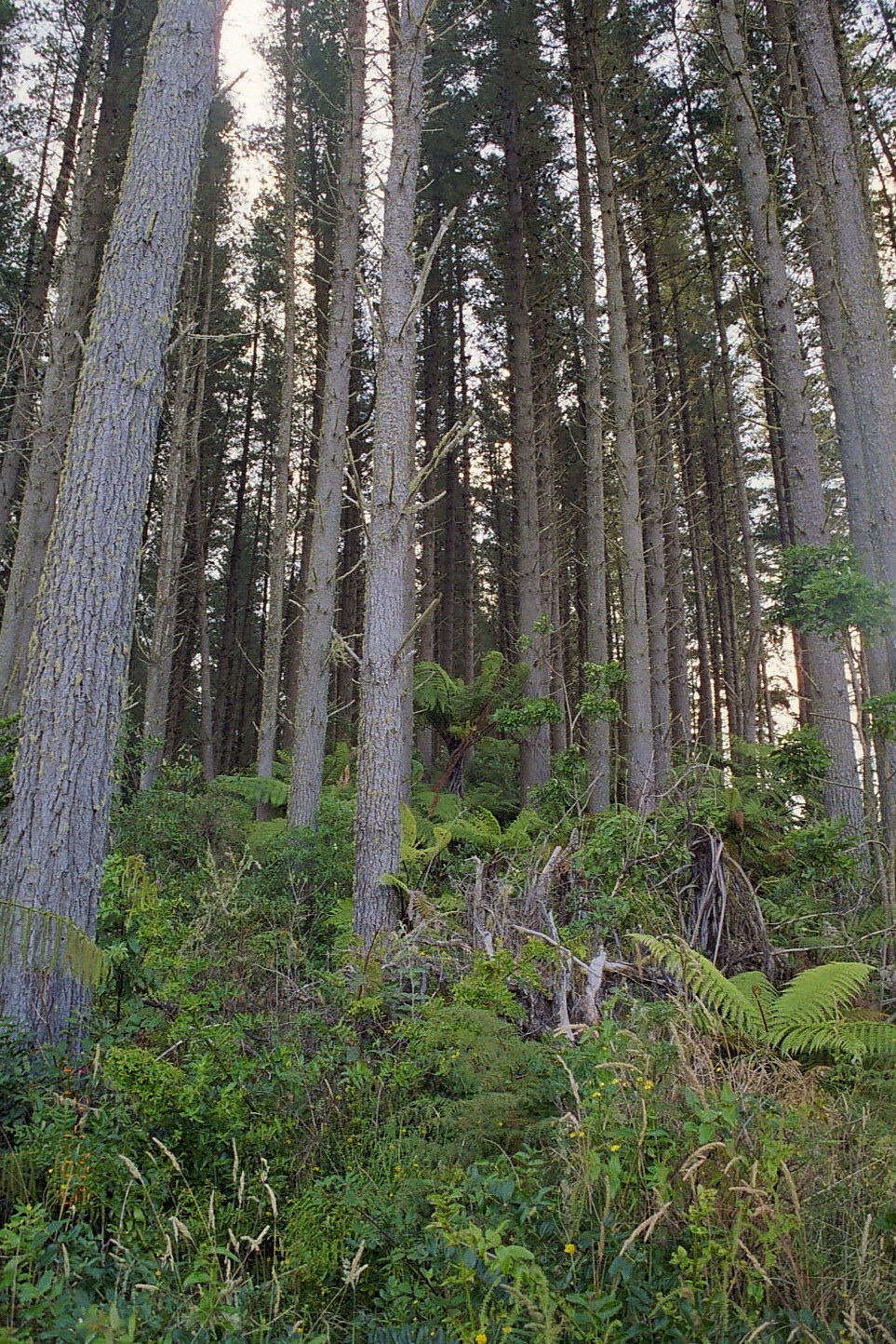
This is what a plantation looks like, it's hardly a monoculture
And, trees are the skyscrapers of the plant world. They put a huge amount of biomass in a smaller area of land than other plants.
We could replicate what the Kiwis have, that is, grow more wood on fewer acres. Forest geneticist William Libby, Ph.D. says increases of 40% in productivity are easily obtainable in American forests. Instead, California imports 75% of its wood, meanwhile New Zealand produces enough wood to take care of its own needs and exports the surplus.
The Week’s “What Next?” Contest (emailed entries are due to whatnext@theweek.com by 5 p.m. Eastern Time, Monday, Feb. 16.) revolves around flight Aeroflot 315’s drunken pilot incident where passengers made enough of a fuss about the apparent intoxication of their pilot, they were able to have him removed and replaced.
According to an article on the London Times Online:
One [Areoflot official] sought to reassure [passengers] by announcing that it was “not such a big deal” if the pilot was drunk because the aircraft practically flew itself.
The Week’s Challenge:
Please come up with a takeoff announcement that might tip off plane passengers that the pilot is too soused to fly.
What the heck. Here’s the entry I sent to “whatnext@theweek.com”:
Good after-noon ladies and germs,This you’re your captain drinking. Welcome to Flight Fwee-Five-Fo-Fum, non-stop from wherever the hell we are right now to Dallas or Dulles or one of those places that begins with the letter “d.” This is a non-smoking flight, but the government has not yet made it non-drinking. Trust me on this one when I tell you that the lovely Maya who just demonstrated how to put a life preserver on, though I think we can safely say she doesn’t need one. Am I right or what? Anyway, where was I? Oh yeah, drinking. Maya mixes a terrific bloody Mary. So, drinks on the house; have her mix you one of those tomato smoothies, sit back, relax, and enjoy our flight to Denmark.
The Week’s “What Next?” Contest (emailed entries are due to whatnext@theweek.com by 5 p.m. Eastern Time, Monday, Feb. 16.) revolves around flight Aeroflot 315’s drunken pilot incident where passengers made enough of a fuss about the apparent intoxication of their pilot, they were able to have him removed and replaced.
According to an article on the London Times Online:
One [Areoflot official] sought to reassure [passengers] by announcing that it was “not such a big deal” if the pilot was drunk because the aircraft practically flew itself.
The Week’s Challenge:
Please come up with a takeoff announcement that might tip off plane passengers that the pilot is too soused to fly.
What the heck. Here’s the entry I sent to “whatnext@theweek.com”:
Good after-noon ladies and germs,This you’re your captain drinking. Welcome to Flight Fwee-Five-Fo-Fum, non-stop from wherever the hell we are right now to Dallas or Dulles or one of those places that begins with the letter “d.” This is a non-smoking flight, but the government has not yet made it non-drinking. Trust me on this one when I tell you that the lovely Maya who just demonstrated how to put a life preserver on, though I think we can safely say she doesn’t need one. Am I right or what? Anyway, where was I? Oh yeah, drinking. Maya mixes a terrific bloody Mary. So, drinks on the house; have her mix you one of those tomato smoothies, sit back, relax, and enjoy our flight to Denmark.
My hope is to sell this article for, like money (as opposed to other forms of currency used for barter or trade) since it’s fungible. Plus, I’ve not yet asked for permission to use the pictures. Note: The [x] is a hyperlinked footnote for fact-checking purposes and won’t be in the final version. Your feedback is appreciated.
——————————————————————————————————————-
Paper or Plastic?
The environmental considerations of buying an e-book reader
Books have been in their current form, ink on paper, since Johannes Gutenberg’s press in the fifteenth century. If I tell you I’m reading a book, you know it’s made of paper. Until recently, electronic books were confined to a niche market for Personal Digital Assistants (PDAs) and computers. Both PDAs and computers use flickering screens, which irritated the eyes. Computers have limited transportability—desktop units don’t leave the office and notebook computers have a short battery life.
Enter devices using “electronic paper” or e-paper: enter the e-book reader.
The Electronic Reader vs The Dead-Tree Book
These handy electronic devices use electronic paper whichcan be read in full sunlight. Knownbecause they useknown as electrophoretic displays, known as electronic paper,energy moves pixels into place on the screen. Once in place images do not need refreshing, giving the device low energy needs as with a television picture.
Imagine a bookstore and library resting in the palm of your hand. Amazon’s e-book reader is perhaps the best known. Amazon describes its product, the Kindle, as a lightweight “wireless reading device” that allows you to “find, buy, and read” text instantly. It holds up to two hundred books, and even more when it’s equipped with a memory card.
So, sShould you buy an e-book reader (which will be referred to as an e-reader from here on) or stick with paper-based three dimensional random-access devices—booksmagazines, and newspapers (or as one wag put it three-dimensional random-access devices)? This article discusses some environmental considerations in your weighing the options. Neither choice is free of consequences because: everything comes from somewhere, everything must go somewhere., and there’s no such thing as a free lunch. The points to consider are:
• The four “R’s” – Reduce, Reuse, Recycle, and finally Rubbish.
• Toxicology 101
• Our carbon footprints – CO2 and yuckier stuff.
• Conclusion – Which book is the “clearcut” winner?
The Four “R’s” –Reduce, Reuse, Recycle, or Rubbish
Rubbish or Hello Landfill, My Old Friend
Though in the hierarchy of options, the landfill must be the option of last resort, we need to talk about it first to put all into perspective. After all, Americans toss 245 million metric tons of waste each year, an amount triple what it was 40 years ago[x].
Electronic books ought to shine here, since as Bob Sacks, president and publisher of Precision Media Group puts it, “bits and bytes don’t fill up landfills[x].”
Digitally speaking, he’s right. Californians alone, discard 1.2 million tons of newspapers and magazines, that adds up to 3% of what’s thrown away annually [x].
Physically speaking, he’s not wholly correct. Bit and bytes cannot fill up landfills, but unwanted, out-dated technology can. The national numbers stagger the imagination. On average, Americans discard more than one computer and three cellular phones every second. (source – Allen Hershkowitz, a senior scientist and authority on waste management at the Natural Resources Defense Council. )
There are 120 million new pounds of electronic waste (e-waste) each year just in California. And since not all of that is recycled, 440 thousand tons of junked electronic goods end up as 1% of its waste stream each year[x].
“It’s a problematic percentage,” said Jeff Huntz; he’s charged with E-Waste Management & Recycling for California’s Integrated Waste Management Board. More about that later.
Score the point to paper.
Reducing or Cutting Down on Cutting Down (Trees)
Kevin Pereira of cable TV’s G4 network, called the Amazon Kindle, “the savior to many, many forests in the future”[x].
We Americans like wood so much and find it so useful, we consume three times as much the rest of the world. We like using wood for construction, paper products, furniture, patio decking, fuel, film, plastic tape, rayon fabric, and a variety of other products. Americans like wood so much, we use the equivalent of a Connecticut-sized forest filled with trees 100 feet tall and 20 inches in diameter, every year[x]. And we value trees and forests so much, the wood we use often comes from outside of America’s borders[x].
Newspapers, books, magazines, and writing paper account for about one-quarter of that theoretical forest.
Kevin Pereira is recognized as an expert on trends in video games and technology, not economic theory.
Amazon’s founder and CEO, Jeff Bezos has become successful on recognizing what people want to buy. After all, Amazon.com is one of the few dotcoms to make money and survive the Internet business bubble. Since Kindle debuted, Amazon is selling more books. Bezos told attendees at BookExpo America, an annual bookseller’s tradeshow, “After purchasing Kindle, customers continue to purchase the same number of physical books that they bought before buying their Kindle, but altogether…their [Kindle plus physical] book purchases on Amazon increased by a factor of 2.6.”[x]
The first six months of a product startup may not tell the whole story, but the data intimates something similar to the result of the mythical paperless office: companies found they used more paper and ink as a result of high speed printers and computers, not less. There have been some indications this is changing with a generation used to computers and reading from screens. Still, more generally, technology’s use tends to increase the consumption of paper.
Score this one a draw.
Reusing – There’s Gold in Them Used Books
People reuse books. Do electronics have the same staying power?
There are diehards who are still running MIT’s Altair 8800, Commodore’s Amiga 1000, Apple’s Macintosh 128, or Tandy’s TRS-80. After twenty years, many still love the Apple Newton, one of the first personal digital assistants (PDA). These are exceptions.
The reason we aren’t still using the Altair 8800 is an observation Gordon E. Moore of Intel made in 1965. It has been so self-fulfilling it became known as “Moore’s Law.” Moore’s Law fuels the electronics revolution: “The number of transistors on a chip will double about every two years.” The result is more power, faster and cheaper. And we want it.
And in some ways, we need it. Programmers write software that takes advantage of the more powerful chips. Older machines cannot handle the memory-hungry programs so they are phased out. At some point, users must upgrade.
“[T]he first law of the digital age: newer is better,” said Scott Pelley on CBS’s Sixty Minutes. “In with the next thing, and out with the old TV, phone or computer.”[x]
Greenpeace lists the average lifespan of a computer as three years, mobile phones, two[x].
Books are passed around, resold, donated. Computers offer more of a challenge. The US EPA maintains a website listing places to donate or recycle old computer and other electronic products. A cursory perusal yielded no donation places for my old machine, only recycling.[x] There’s always eBay and Craig’s List.
Score the point to paper.
Recycling or “In A Previous Life I Was A Book About Shirley MacLaine”
Recycling saves energy. Recycling paper, to make paper of the same or lower quality than it was originally, can reduce energy consumption up to 40%. The energy savings is as much as 70% for plastics[x].
Recycling saves raw materials. Depending on the age of the equipment, one ton of scrap from discarded PCs can contain more gold than can be produced from 16 tons of ore[x]. “If you can use recycled materials, you don’t have to mine ores, cut trees and drill for oil as much,” says Jeffrey Morris of Sound Resource Management, a consulting firm based in Olympia, Washington[x].
We have made significant increases in recycling in the past 50 years. Taken per capita, half of what we toss now gets recycled. The down side is we throw away nearly twice as much (by weight) than we did 50 years ago. The average person still produces 2½ pounds daily that ends up in the landfill. The result is an increase in trash since our population has nearly doubled during that time[x].
How is electronic waste recycled?
In the case of Japan’s Panasonic Company, they manually disassemble electronic waste by separating out the various elements, cleaning, crushing the glass and sealing the remains. Not everyone takes as much care as Panasonic.[x]
Much of our recyclable material goes to developing nations, primarily China and India. There, poor migrants dismantle and recycle anything from plastic to electronic waste. Often, the methods employed (usually illegal) pose health and safety risks for workers, others, and a serious threat for the environment[x][x][x].
In Guiyu, China and other backwaters like it, people burn the plastics over fires in the open, pulling out chips and pouring off the lead solder. Men use a medieval acid recipe to extract the gold inside [x].
One method soaks CPUs, pins, and edge connectors in a nitric solution for a week, which separates the gold from the other metals. The ‘recycler’ then adds aqua regia (a yellow fuming corrosive mixture of nitric and hydrochloric acid), which dissolves the gold. Silver can be precipitated out with common table salt to silver chloride.[x]
The Future of recycling electronics
Recycling will improve over the years as manufacturers learn to create products designed for recycling or mulching. The Sustainable Packaging Coalition, a non-profit working group that has already developed guidelines emphasizing the use of renewable, recycled and non-toxic source materials.[x]
Score the point to paper.
Toxicology 101
Toxic Leftovers
Thousands of chemicals are used in the production of electronics, so E-wastes contain a witches’ brew of heavy metals and organic compounds that have been linked to cancer, brain damage, and birth defects. These include arsenic, chromium, and cadmium mercury, lead, lithium, nickel, chromium, copper, cobalt, lead, mercury, molybdenum, polybrominated diphenyl ethers (PBDEs), polychlorinated biphenyls (PCBs), vanadium, yttrium, and zinc. All of these can (and in many communities have) end up in the water we drink or the air we breathe[x].
By some accounts, discarded electronics account for 70 percent of the overall toxic waste currently found in landfills [x].
Toxics in Technology
Paper recycling involves chemical surfactants, and hydrogen peroxide, hydrosulfites, chlorine dioxide, or oxygen used in the bleaching process. These chemicals are nothing to be trifled with. Still, compared with e-waste…
Score the point to paper.
The toxicity of ink – Yo Soy Hombre
Compared with the lethal alphabet from Arsenic to Zinc, petroleum-based inks seem to be a small worry. Petroleum-based inks contain VOCs, volatile organic compounds that evaporate and react to sunlight.
Manufacturers make soy ink by blending soybean oil with pigments, resins, and waxes. Though it’s not 100% biodegradable or edible, soybean ink needs less energy to manufacture and has fewer VOCs [x].
In the U.S., 30% of newspapers already print using soy ink for their black-type print, and 90% of all newspapers use soy ink for their color runs [x].
From the user’s viewpoint, though soy ink has a lower rub off than petroleum-based ink [x], e-ink won’t rub off.
Score the point to the ereader.
Your Other Carbon Footprint – Cyanide
Electronic stuff doesn’t grow on trees, or on anything else.
“If it’s not grown, it has to be mined,” says resource geologist Sarah Andrews, author of the Em Hansen mysteries. “Welcome to my world.”
It’s a world filled with explosives, Bunyanesque front-end loaders moving unfathomable amounts of dirt, toxic organic chemicals and heavy metals. Obtaining the raw materials needed for the manufacture of technological devices has an environmental cost.
“These are not your grandfather’s mines,” says Robert Moran. Moran has a PhD in hydrogeology. His company, Michael-Moran Associates, has commented extensively on the environmental impacts of mining projects around the world. He recognizes both sides of the controversy.
Moran describes present-day mining like this: “most are open-pit mines that are constructed on a huge scale unheard of less than thirty years ago.”
The best known is the Kennecott Copper Mine. At 2 ½-miles across, and ¾-mile deep, it is the world’s largest man-made excavation and can be seen from outer space.
Moran goes on to explain that for every ounce of gold, a gold mine displaces and crushes at least thirty tons of material. Then, most employ the ‘CL process’—cyanide leaching. The miners splash cyanide over the ‘headings’ (tailing are the leftovers) to separate the gold and other metals from the headings. The cyanide percolates through the ore and drains into pits.[x]
“Pits at some sites,” Moran says, “are over two thousand feet deep, and one to two miles across.” Gold produced through strip-mining—and most is produced that way—generates nearly eighty tons of toxic waste for each ounce of refined gold. “Everything in the periodic table will be in the waste tailings.”
After the ore is mined out, the pits and the cyanide products remain like nuclear waste: around for a long time and no one really knows what to do with it.
Hard-rock mining produces more toxic waste than any other industry in the US, though that number is better than it used to be. The EPA holds the US mining industry to higher environmental standards than most mines will be in other places in the world.
The manufacturers of e-readers consider its architecture to be proprietary and they’re too new to have been recycled in any numbers, so we don’t know their makeup. Let’s assume that each e-reader needs about one-thousandth of an ounce of gold, because that is roughly the amount of gold used in a single mobile phone. This amount generates over one hundred pounds of toxic waste—just for the gold. And while gold may be the sexiest metal in the mix, it is far from the only one.
So, because all of our electronics use plastics and a host of metals in their construction, each one leaves behind significant toxic baggage.[x] And, every year, billions of electronics are produced. Instead of saving trees for our descendants, we’re leaving tons of toxic wastes and landscapes where trees may not grow for millennia.
When we gather the raw materials for paper, we cut down trees. Trees do grow back.
Point goes to paper.
Conclusion or Which one is the clearcut winner?
Conventional wisdom holds to the idea that technology saves trees and energy. This contains at least two fallacies: that the crowd is correct and the problem is a straightforward one-to-one substitution. Mark Twain wrote, “Whenever you find yourself on the side of the majority, it is time to pause and reflect.” Or to put it as curmudgeon H. L. Mencken put it, “For every complex problem there is an answer that is clear, simple, and wrong.”
Using less paper and wood means using less technology, because as we’ve seen with Amazon’s book sales and the paperless office, technology’s use tends to raise consumption of paper, rather than lower it.
If we’re going to use something, perhaps using trees isn’t such a bad thing. Trees replenish cutover areas.
Paper-based books come from something renewable and electronics hail from a non-renewable source. Forests grow back; metal and oil doesn’t. Name one part of your computer, personal digital assistant, mobile phone, or e-reader that is grown. One part, any part, that qualifies as natural and renewable. I’ll wait.
* * *
Trees use carbon to manufacture cellulose. After making something from that wood such as furniture, building material, or paper, the carbon stays locked in the product. Plastic or metal manufacturing uses nonrenewable sources while releasing more carbon. Non-renewables consume more energy in their extraction, transportation, site reclamation, and production, than their renewable counterparts.
In the interests of full disclosure, this is where I have to admit to being a forester. I have seen the before-and-after of tree cutting, and I have watched forests over decades. I support conserving trees. I also support harvesting trees responsibly. We need to grow more trees. And then we need to use the wood we grow as a substitute for metal and plastics wherever possible.
Given our current mining and recycling technologies, a clearcut that will be filled in with saplings after less than a decade looks like the better alternative when compared to gouges in the earth filled indefinitely with everything in the periodic table.
So, except for the color of the money to buy them, electronics just may not be all that green, due to what economists call “externalities” and the “tragedy of the commons[x].” These are what the rest of us non-economists might call “making a mess and not cleaning it up.” Winner: Dead-tree books, they have fewer externalities, at least for now.
Do the landfill and toxic waste issues surrounding electronics mean we should not buy new technology? This is not a Manichean choice; it’s not either or. The answer lies not in returning to Neolithic times, but in considering the effects of the decision to buy beforehand.
I’m a forester, I’m not a Luddite.
That’s it. That’s my article. Your feedback is appreciated.
Governor Arnold Schwarzenegger has announced his appointment of Del Walters as director of CAL FIRE.
“With more than 30 years of service at CAL FIRE, Del Walters is the perfect person to head our state’s firefighting efforts,” said Governor Schwarzenegger. “Playing a key role in combating the 2007 and 2008 firestorms, he has the experience and leadership capabilities to implement the highest standards of fire prevention and fire fighting while ensuring all Californians are protected. Under Del’s leadership, I am confident that the state will continue to be prepared to respond to the intense year-round fire seasons we now face.”
Walters has served as the executive officer for CAL FIRE since 2008. He began his career as a firefighter in 1971. Prior to promoting to executive officer, he was the assistant region chief then staff chief of operations for the Northern Region. Prior to that, Walters was the deputy chief for the Shasta-Trinity Unit. He previously worked for the Sonoma-Lake-Napa Unit as the assistant chief of administration, battalion chief, vegetation management program coordinator forester I and fire captain. He has also served as a fire captain, fire apparatus engineer and firefighter for the San Benito-Monterey Unit. Walters has been a California State Peace Officer since 1986.
“I am honored to serve the people of California in this new role,” said Del Walters. “I look forward to working with the Governor to continue our fire prevention and protection efforts while preparing Californians for the extraordinary fire seasons our state faces.” [Don’t forget about forestry]
Walters, 54, of Redding, received his Bachelor of Science degree in forest resource management from Humboldt State University. This position requires Senate confirmation and the compensation is $174,096. Walters is a Democrat.
As CAL FIRE’S Director, Walters will oversee 5,500 full-time and seasonal employees. CAL FIRE is dedicated to the fire protection and stewardship of more than 31 million acres of California’s privately-owned wildlands. In addition, the department provides various emergency services in 36 of the State’s 58 counties via contracts with local governments. CAL FIRE firefighters, fire engines, and aircraft respond to an average of more than 5,700 wildland fires each year. Those fires burn nearly 170,000 acres annually.
I’ve known Del for most of my time with CDF, er Cal Fire. He’s competent and clear-headed. I wish him all the best. It’s nice to see one of the good guys get the job.
I arrived in early 2005 for a forester’s tour intent on “learning about forest ecology, biodiversity, conservation policy, the forest economy, and intensive plantation management.” I spent my first night there in Wellington, which felt like a smaller version of San Francisco. It had hills, Victorian houses, and spectacular views of the ocean.
Wellington, NZ (Wikipedia image)
New Zealand’s like California in many ways. It is only slightly smaller than California with a similar climate. Like California, New Zealand is part of the ‘ring of fire’ and has frequent earthquakes. And, the people radiate a pioneer vibrancy. They come from Polynesia, and the United Kingdom and its former British colonies. The ‘Kiwis’ have an independent can-do streak. New Zealand even had a gold rush complete with placer mining.
While the land area is near in size to California’s, the population size is closer to Los Angeles. Sheep outnumber people by ten to one. The largest city, Auckland, has one-tenth the population of LA. Another big difference for me, an LA kid familiar with LA freeways – they drive on the wrong side of the road.
Though the land area is near in size to California’s, the population size is closer just over one-tenth of California’s. Sheep outnumber people by ten to one. Perhaps as a result, Kiwis are intimate with the land. Their livelihoods derive from it.
The Kiwis still harvest trees. Wood is their number-three export after meat and dairy. While California imports 75% of its wood, New Zealand produces enough wood to take care of its own needs and even exports the surplus. To me, a California forester, it’s heaven with a lower case “H.” They even cut California trees: California’s Monterey pine (Pinus radiata) to be precise.
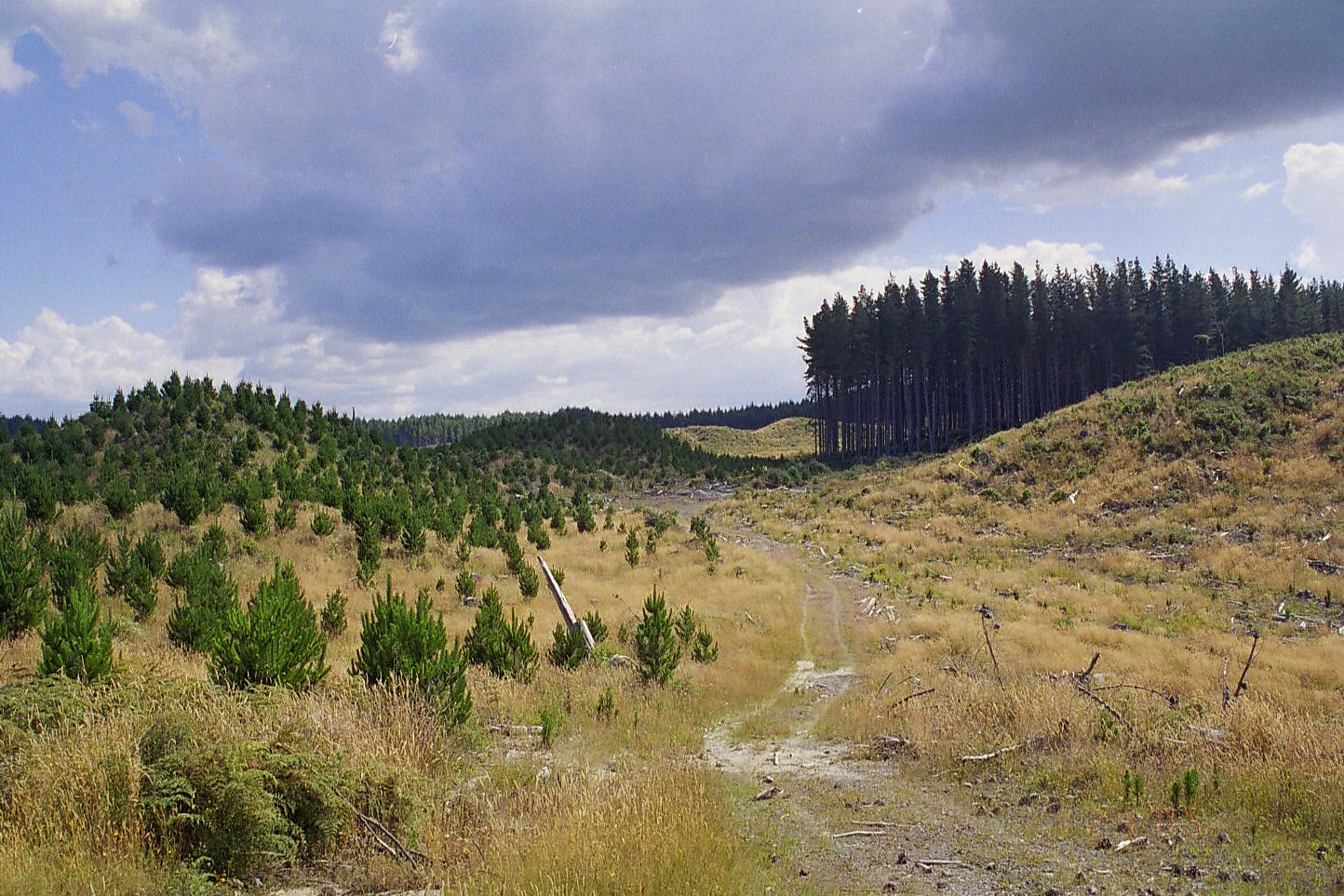
New Zealand and Australia as well, had planted radiata pine in a big way. They were growing pines that would qualify in California as “Heritage” tree size and harvesting them in only 25 years. In fact, one-acre of Monterey pine in New Zealand produces almost ten times more wood than our most productive natural forest.
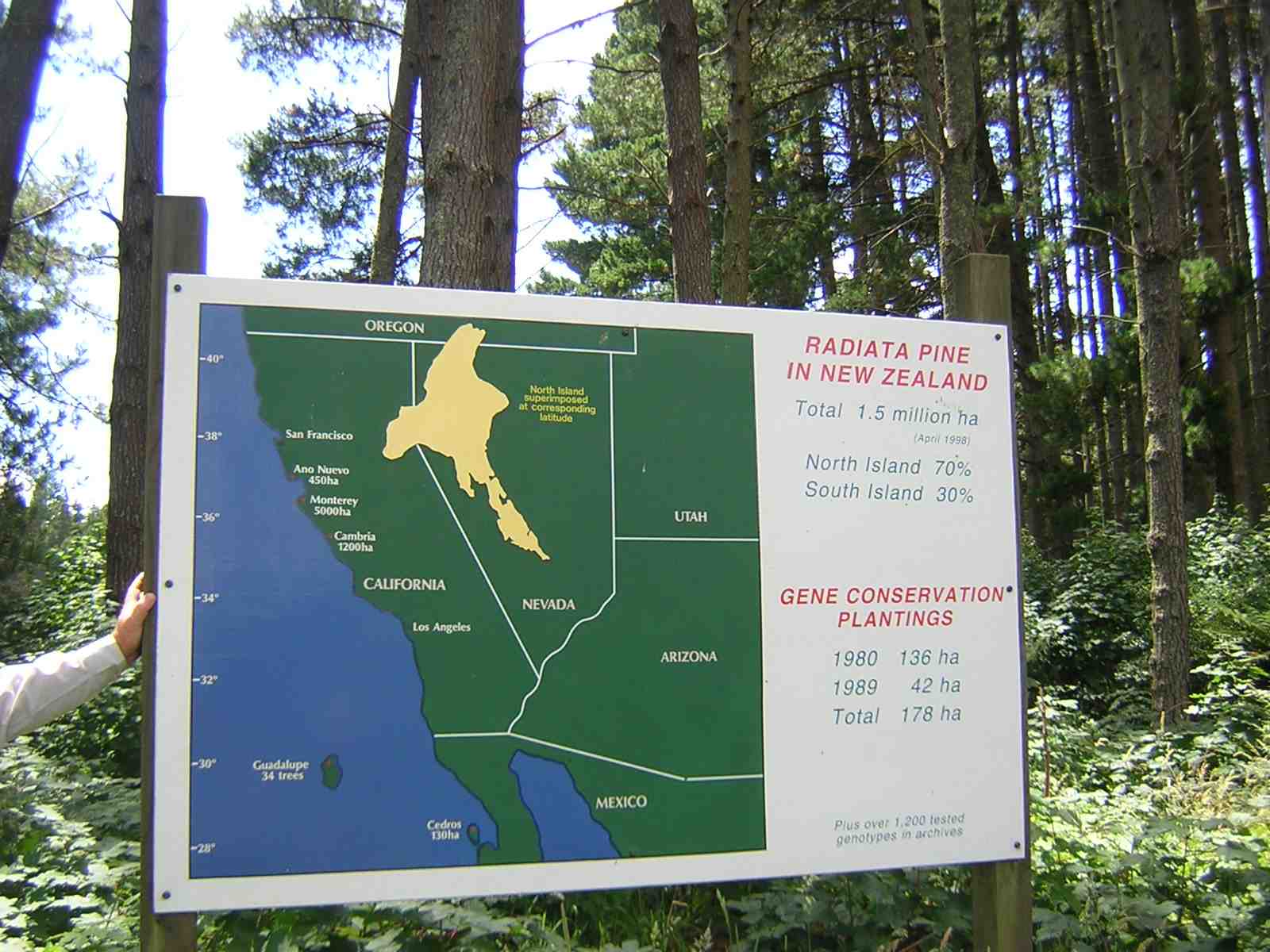
NZ's North Island Superimposed at Corresponding Latitude
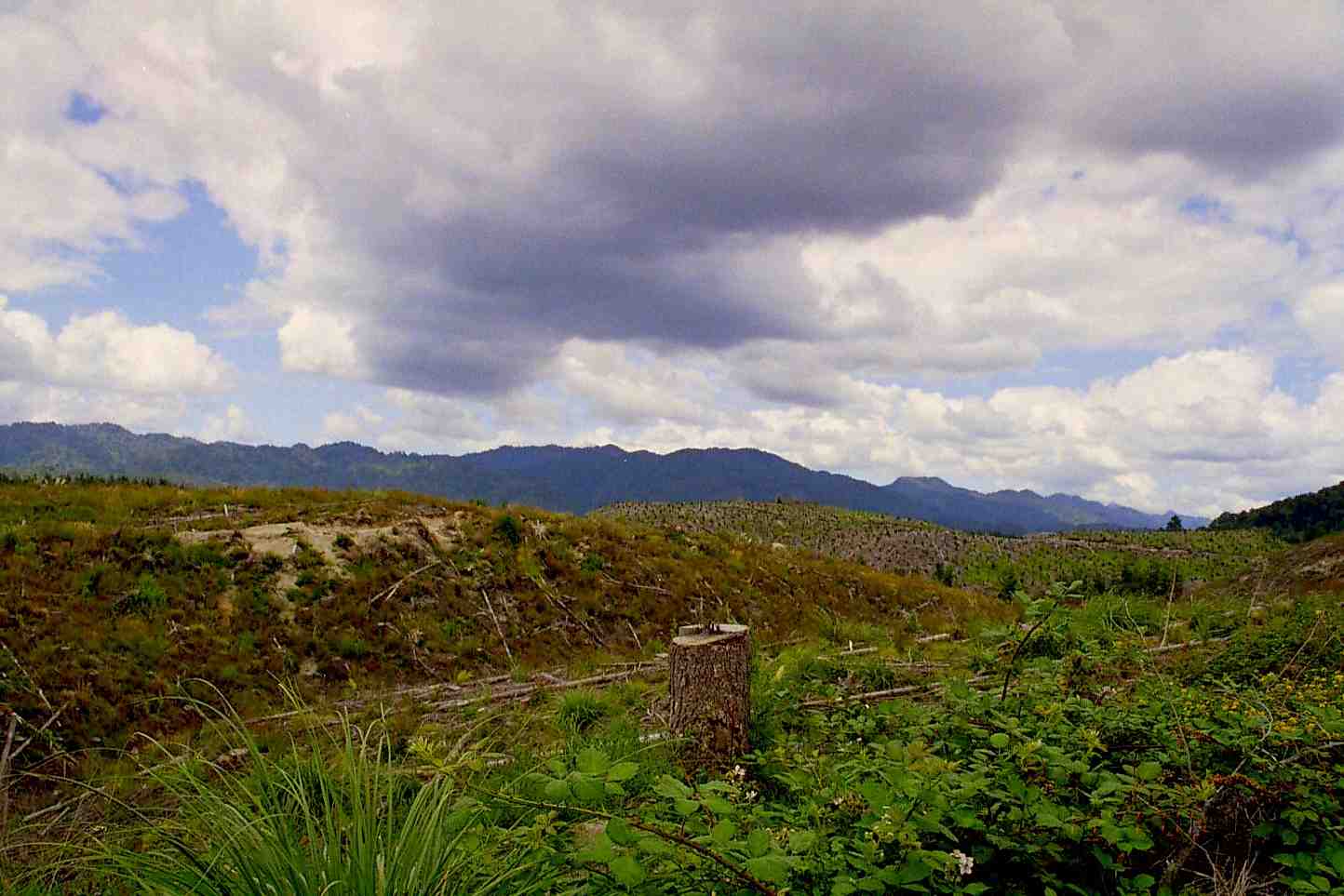
Their love for radiata pine started around the mid 19th century when wool was the high-end commodity: ‘a pound for a pound’ meaning a pound sterling for a pound of wool. Follow the money, they cleared the native forests and converted the land to pasture for sheep.
In 1905, their annual timber cut peaked and began to decline. The 1913 Royal Commission sounded the alarm: New Zealand needed more wood than remaining native forests could provide. The commission recommended an aggressive program of intensive forest plantations. They believed the native tree species would be too slow growing to provide for their domestic wood needs. They planted many different types of trees to replace the bush that they had cleared: ponderosa pine, black pine, larch, coast redwood, Douglas-fir, and Monterey pine to name a few. They succeeded. New Zealand saved ten acres of native forest for every one-acre planted.
“… [the Boy Scouts] will have to start a fire using the apparent friction between what they say and what they do.”
As a Registered Professional Forester in California, I take issue with such a Manichean depiction. Trade-offs and gray areas are part of life. Most likely, the areas that the scouts logged were second-growth and had been logged before. Forests do grow back.
“The bottom line is this: If we are going to continue using more and more wood, then we have a moral responsibility to grow more wood to meet that demand. By not striving to grow our own wood, we inevitably shift that burden to other nations and regions not able to do it as responsibly and sustainably as we do. That makes us a nation of hypocrites, preaching the virtues of environmental protection while encouraging other nations to disregard those virtues for our benefit.” (Daniels 1993)
So here’s a tip of my hat to the Boy Scouts (who said they would replant the logged sites) and a wag of my finger to you, Stephen Colbert, and to the Hearst media conglomerate. We should not simplistically fob off providing this country’s wood needs to other countries with low environmental standards and call it conservation. That would make us hypocrites.
Steve Nix, a professional forester, wrote this in his about.com blog:
[The Hearst story: Chain Saw Scouting] has infuriated thousands of foresters, forest scientists and scout supporters that the BSA (Boy Scouts of America) has been attacked for actually living up to their conservation pledge by using sound forest management practices in most if not all the harvests. Many of these forestry professionals grew up under the influence of the Boy Scouts of America and are now leaders in BSA.
[F]or decades, local Boy Scouts of America (BSA) administrations across the country have clearcut or otherwise conducted high-impact logging on tens of thousands of acres of forestland, often for the love of a different kind of green: cash. … Scouting councils nationwide have carried out clearcuts, salvage harvests and other commercial logging in and around sensitive forests, streams and ecosystems that provide habitat for a host of protected species, including salmon, timber wolves, bald eagles and spotted owls.
Count me as taking offense. They logged for cash!?! As opposed to doing something else for what? Shells? Trinkets? Credit default swaps? I’m sorry, ‘pretty’ doesn’t pay the bills.
I won’t comment on whether any of the BSA councils failed to follow codicils within deeds of property when they were given gifts of property. I don’t condone that. I don’t like not caring for a piece of property through timber management either.
The mission of the Boy Scouts of America is to prepare young people to make ethical and moral choices over their lifetimes … While chartered by the national council, local councils are governed by their local volunteers and executive boards. Each council’s Scout Executive manages council operations–including finance, property management, … Timber harvesting has been a part of many council land management plans for decades as a way of practicing good stewardship of land resources.
What looks like devastation (to some) is not forever. For some reason we think that logging should only be done for a loss and only if there is nothing else to be done. We seem to have forgotten that forests have been thrown out of balance by our fire suppression. That forests’ flora and fauna have niches.
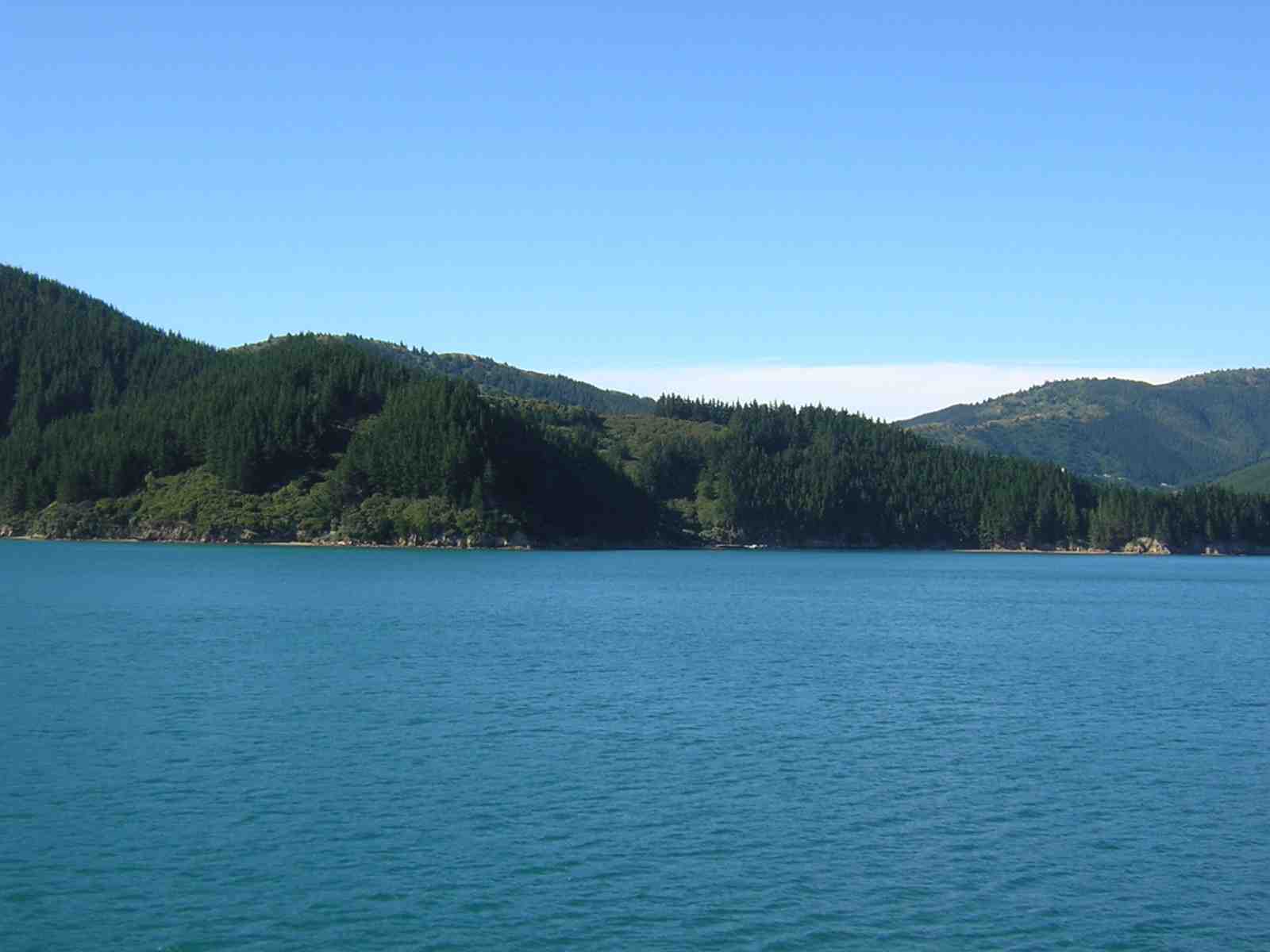
Radiata pine growing on a hillside south of Wellington
In upcoming posts, we’ll look at a place that uses alleged “high-impact logging” such as clearcuts: New Zealand. New Zealand still harvest trees. Wood is their number three export after meat and dairy. While California imports 75% of its wood, New Zealand produces enough wood to take care of its own needs and exports the surplus. To me, a California forester, it’s heaven with a lower case “H.” Mind you, they don’t cut native trees. They cut California trees: California’s Monterey pine(Pinus radiata) to be precise.
The Forest Service’s Center for Urban Forest Research (CUFR) has developed the California Tree Carbon Calculator (CTCC). The calculator is programmed in an Excel spreadsheet and is the only tool approved by the California Climate Action Registry’s Urban Forest Project Reporting Protocol for quantifying carbon dioxide sequestration from green house gasses (GHG) tree planting projects. The calculator provides carbon-related information for a single tree located in one of six California climate zones (San Joaquin Valley, Sacramento Valley, Central Coast, North Coast, Sierra Nevada Foothills, and Southern California).
CTCC outputs include:
Annual energy savings in kWh of electricity and MBtu of heating per tree
Carbon dioxide equivalents of these energy savings
The CTCC can be used to estimate GHG benefits for an existing tree or to forecast future benefits for a planting project.
Naturally, they say to not expect too much of it:
Users should recognize that conditions vary within regions, and data from the CTCC may not accurately reflect their rate of tree growth, microclimate, or building characteristics. When conditions are different it may be necessary to apply biomass equations manually using adjusted tree growth data and perform building energy simulations with modified weather and tree data to more accurately depict effects of trees on GHGs.
The CTCC is intended as “proof of concept” software that is in the testing phase. It is provided “as is” without warranty of any kind. In 2009, data for other tree species in climate regions across the U.S. will be added, and in 2010, this version will be replaced by a Web-based version with greater functionality.
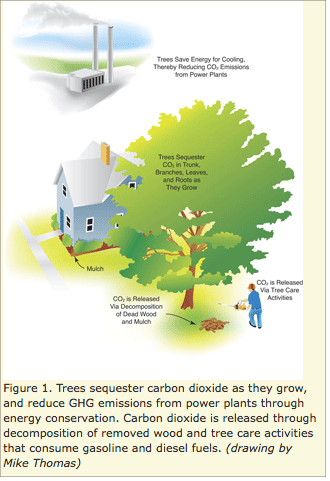
I take some issue with Figure 1’s “Carbon dioxide is released through decomposition of removed wood…” If you remove the wood and allow it to oxidize, then yes the oxidizing agents (i.e., microorganisms or fire) release CO2. If you make the wood into a long term product such as lumber, flooring, furniture, etc., then the carbon remains in the wood. Then go plant another tree and start locking up more CO2.
It’s a Windows app. Go here if you wish to download it.



 Nullius in Verba