I mentioned a scientific paper the other day that is making its way through peer review titled, Falsification Of The Atmospheric CO2 Greenhouse Effects Within The Frame Of Physics by Gerhard Gerlich and Ralf D. Tscheuschner.
It seems there may be other laws of physics that have been slighted, see On the First Principles of Heat Transfer: A Note from Alan Siddons on Jennifer Marohasy’s blog. I’ve learned heat transfer laws many times but it’s good for the refresher. Heat transfer is one of the first principles taught in any fire training because knowing how stuff catches fire and how to stop stuff from burning ranks high on the firefighter’s list of “stuff to know.” Water makes a good extinguisher because it can hold lots of heat especially compared to gas.
I’m not saying that the Earth is not heating up. I’m saying we should rigorously examine the cause.

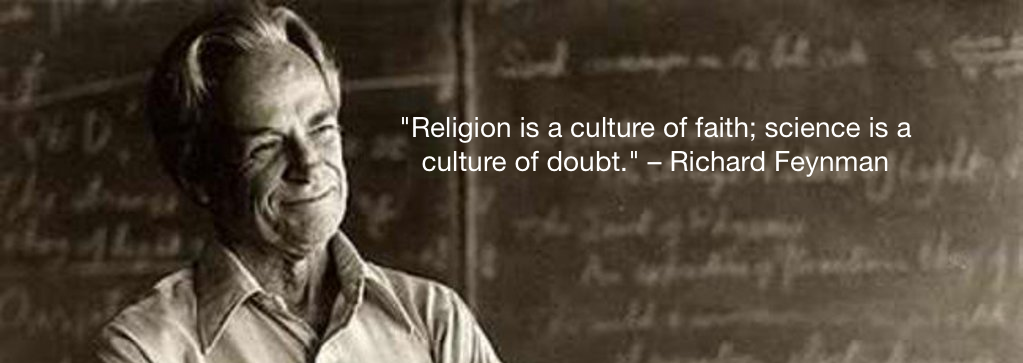
 Nullius in Verba
Norm, would you also agree that it’s more important to rapidly reduce our carbon output than it is to argue about the cause of the global warm up? My thinking is more or less like this:
We know we’ve got climate change.
We have some pretty good evidence that human activity resulting in greenhouse grasses is likely to be at least a major contributor the the climate change.
If we reduce our impact, it may slow or stop the climate change making it possible for the human species to survive.
Sure, it may be that sunspots or some other normal change in the sun or whatever is the cause or a contributing cause, and we can’t change that.
But it would be such a shame if we could have stopped or slowed it and didn’t.
What, other than cost, is the downside of reducing our carbon footprint?
Thanks for the response Anne. I agree not only do we have climate change, we have global warming. It’s the cause and the “what next” step that I’m not as sure of. There is a community of organizers and fund-raisers who make their living creating fear–give now or the (insert endangered thing here) will be forever gone; I don’t think panic is any way to make rational decisions. We know that warm times and ice ages occurred before humans arrived on the earth; why? We know that CO2 increased during those warm times; why?. And, according to the 2nd Law of Thermodynamics the “greenhouse effect” doesn’t exist. Toss in primitive computer models…
I’ll address the question of cost in a post.
Thanks for your response.
I’m with you on this Timber. Diarists dating back to the 17th century have noted strange happenings in the weather. January 1st in one year was warm and sunny and the diarist was concerned as to why there had been such warm and sunny weather for so long. (Northern hemisphere, of course). Another January entry has everyone worrying as to the cause of the River Thames freezing over and trees splitting from the icy temperatures. I can give more specific details if necessary. Just short of time for looking it up.
Comparisons of man-made CO2 emissions versus underwater volcanic eruptions per year might prove worthwhile.
Apparently, there are times when the polar axes reverse as well. Imagine the problems with that one re climate and thousands of other things that depend on the magnetic north. I haven’t time to research this and all the other things I am interested in but a friend suggests the Canadians are well up on this. An internet search for ‘polar reversal Canada’ might prove interesting.
My point? There are some things we can do very little about, except to be ready.
There are some things being blamed on things which just keep our eyes off what is really happening in the world.
CO2 emissions? Personally our family has a very low one so I have little more I can contribute.
Population control would help. But that’s not politically correct, is it?
Check out Paul Sheehan’s opinion article at the Sydney Morning Herald, wrote an overview of the book Heaven and Earth by Ian Plimer. His article is titled Beware the climate of conformity. Here’s the link: http://www.smh.com.au/opinion/beware-the-climate-of-conformity-20090412-a3ya.html?page=-1
Svante Arrhenius quantitatively described the “greenhouse effect” in 1896. He was trying to describe why we weren’t in a perpetual ice age. If you read Sheehan’s piece, you’ll see that Plimer says we are still in an ice age and are on the way out.
Arrhenius used the scientific method:
– Observe a phenomenon.
– Formulate a hypothesis concerning the phenomenon.
– Develop of a method to test the hypothesis.
– Conduct experimental testing to gather data.
– Review and analyze the data.
– Draw a conclusion that validates, negates, or modifies the hypothesis.
To my mind, the present discussions have moved away from the classical scientific method to something better described as “Sustainability science” which employs semi-quantitative modeling of qualitative data or an inverse approach system—working backwards from undesirable consequences to identify better ways to . A key ingredient seems to be that there is no time to lose, we need to do something drastic. Fear is the motivator to get us to do something.