
Happy 40th Earth Day Everyone!
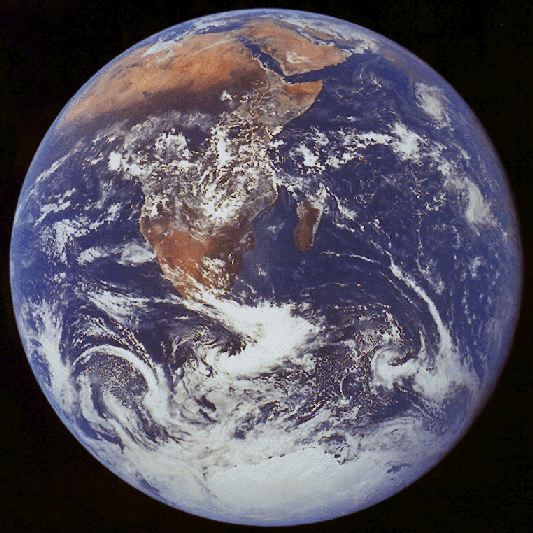
As I’ve written before, on April 22, 1970, I attended one of the first Earth Day celebrations (as did 20 million others that day). The one I went to was held at Santa Monica City College.
In those days, most of us in the environmental movement worried about the population bomb exhausting our resources and causing global famine; and we feared air pollution causing another ice age through global cooling. Obviously, we hadn’t considered the population bomb causing global warming through our exhalations and farts. Little did we know.
I had a copy of The Population Bomb by Paul R. Ehrlich in my back pocket back then, before the world wide web and cell phones. Many doomsayers proclaimed Malthus—an eighteenth century economist who argued that human population growing exponentially would quickly outstrip crop yields which grew arithmetically—was a Pollyanna. Like Malthus, Ehrlich was convinced that the world’s exponential population growth would outstrip the earth’s ability to cope and we’d devour everything on earth like locusts. We needed to curb out population NOW or humankind would implode like the locust. We’d be standing on banana peels over our graves if there were any bananas to be found, the skyrocketing population had already eaten them.
Indeed the world’s population has almost doubled, yet instead of cleaning off every whit of resource and the world being poorer, sicker, and hungrier, we find that since 1970: we are three times richer (in real terms), the percentage of people in abject poverty has dropped by over two-thirds, a greater percentage of people are better fed, the average person in a developing country eats more, the world’s forests cover 99% of what they did in 1970, and the known oil reserves have nearly doubled.
Here’s a comparison of where we were in 1970 and where we are today:
Comparison of earth in 1970 with earth 2010 |
|||
| 1970 | 2010 | % Change | |
| World population | 3,692,492,000 | 6,816,100,000 | 84.6% |
| The percentage of the world population living on less than $1 a day (in PPP-adjusted 2000 dollars) | 26.80% | 5.40% | |
| Forest on the earth (in billion hectares) | 4.03 | 4.0 | -0.7% |
| Avg Daily Kilo-Calories per person in a developing country | 2135 | 2674 | 25.2% |
| Known oil reserves (in billion barrel) | 650 | 1200 | |
The world did not change the way Ehrlich, Malthus, and others thought it would. So the environmental raison d’être has changed. Population still gets flung about but now it’s global warming that’s being shouted by knowledgeable experts. We need to curb our pollution population greenhouse gases NOW or humankind will freeze to death starve to death, well I’m not sure but trust me, the Malthusian prophets of doom will continue to bang their pots and rend their clothing. Things may yet grow worse, as Bullwinkle J. Moose used to say, “This time for sure.”
The world will change over the next 40 years, tell me are you more optimistic or pessimistic about the state of the world’s environment for those years?
For more on Earth Day, I recommend an article in the New York Times by John Tierney, For Earth Day, 7 New Rules to Live By.

 Nullius in Verba
The population bomb most certainly went off where I live!!!…/3rd World Planet Eater’s have destroyed Maryland & the Bay moving here to be close to D.C. & it’s hand-outs… Greens are full of BS!!!
I found this article to be very reassuring that, despite the hand-wringing about how quickly we are going to heck in a a handbasket, the worldwide population growth rate is actually slowing, the people in developing countries are getting more to eat, and the amount of money per individual is getting slowly better. While the rate of improvement seems slow, taking the long view as this post does is helpful to me.
3rd world population growth is unabated.Greens need to pull their heads out of their butts & stop all the PCBS 🙂
Use Google Earth to see what’s happening to the worlds forest,Clear Cuts everywhere!!! & How well are Global Fish stocks doing,not to mention the high profile Tigers(India & China are wastelands).This Planet is toast thank’s to the 3rd World Over-Breeders 😦
Hi Icetrout,
I appreciate your comments. I understand that seeing clearcuts can look quite awful. Clearcutting does not equal fragmentation (source: FAO definition). All forests have evolved with natural disturbances. If we want to keep a healthy mix of trees, there’s not only an excuse to allow clearcutting, there’s a place for clearcutting. Every gardener knows some plants work best in shade and some thrive in full sunlight. The same holds for trees. Some trees, such as ponderosa pine and Douglas-fir, do best in full sunlight. Other trees grow in shaded conditions. Foresters prescribe clearcutting in order to be able to plant trees that are intolerant to shade. Selection cutting will move the species mix toward shade-tolerant trees because the ones needing full sunlight won’t be able to compete and will get crowded out. Without major stand disturbance such as fire, logging, or extensive windthrow to create those openings, trees such as ponderosa and Douglas-fir won’t have the conditions they need to survive and will be shaded out.
As to over-breeders, that relates to agrarian/non-agrarian cultures. Research shows that birth rates drop to 2.1 per family in urban environments. Our world’s population is expected to peak between 8-9 billion and then decline.
I don’t mean to give the impression that there aren’t challenges. I’m just suggesting that we look back and say we’ve made progress to keep our spirits up for the journey ahead.
Cheers,
Norm
Norm your rice-bowl depends on the killing of the planets Forest, your views are therefore that of a tree-killer,despoiler of the Planet.Clear-cuts destroy Rivers & Streams with the silt that runs off with every rain.If that’s not true than where did all the salmon & trout of the Northwest go to??? Sure blame it on the Indians.lol Cheers,Chris.(The way you spout out % I knew you were a Government Forester kill any Spotted Owls lately???)
Icee,
Remember, if it’s not grown, it’s mined. If you think clearcuts are bad, trees grow back. Slag heaps and leach pits filled with cyanide look worse every succeeding year.
As for spotted owls, I’ve called my share. They need high perches and then openings for foraging.
I’m sorry Norm for bashing on you.Just a bit down thought the environment would be a bit better off than it is now.Your right trees grow back & rivers flush out & Trout seem to find a way to come back somehow.I have mountain-top removals for a backdrop here & your right no matter what mitigation there is for coal mining the land is never the same.We just don’t need any more humans on the planet for any reason. 2 people = 1 child.
Ice,
No worries. I’m used to it. Everybody bashes government employees, they’re easy targets.
Many things are better. For example, despite the US having 50% more people, air pollution is down 60% and smog is down 40%. And, rivers are no longer catching fire.
Maybe Government Employees should start acting like Civil Servants .You sure know how to spout out the party line like a champ./If things are so much better than how come there is an Advisory on eating any Brook Trout from the Savage River(just 1 example),the Upper River in particular.Coal Plants have spread Mercury all over the landscape just like Lead was spread burning Leaded Gas in Autos.Just because you can’t see it doesn’t mean it’s not there.Oh & for the rivers not catching fire no,turning to Battery Acid & killing all life in it ,YES!!!You can’t see it but it’s still there!!! /Tim it’s time you start using your head for something other than a Hat-Rack.& That was no bash,just the truth.If there wasn’t another130 million people here just think we would be using 1/3 less resources,1/3 less pollution,1/3 less development.God Damn a Buffalo 1/3 less Financial Meltdown. lol 🙂
hello.
your 1970-2010 table is pretty. where did you get the forest, money, and food numbers? the only one referenced is the only one i can verify. the others seem to be wrong.
for instance, the FAOSTAT site actually says that global forest cover has dropped 3.5% since 1990. are you saying that from 1970 to 1990, forest cover increased? or that reforested land in northern areas can replace lost rainforest biodiversity in the tropics? is a forest a forest a forest?
for another instance, the international poverty line is actually $1.25 now. more than a billion people are under it. that extreme-extreme poverty rate has fallen by at least 25%, sure, but possibly not sustainably so. nobody knows how long china can keep its balls in the air. btw, my numbers come from the world bank. where’d you get yours?
for nutrition, that looks great, but i’m sure we’re all aware that the underground water that irrigated the green revolution is nearing depletion, that surface water and arable land are getting a little iffy, and that desalination and cheap petroleum are also iffy, for extremely cheap food? oh and that regional averages can hide big local discrepancies in quality of life?
never mind the oil reserves. nobody but peakers and oil execs seem to care how much the oil costs to extract. all the libertarians just run the raw numbers up the pole to salute, eh?
anyway have a nice day.
Hi, welcome to the site and thanks for asking, too often we take bad news without checking sources.
Here are the sources I used for the table:
Deforestation
The forest cover for 1970 comes from Table 1, “World forested area by region, 1973” of “What’s Happening to the World’s Forest Resources” by James J. Talbot, Laboratory for Applications of Remote Sensing, LARS Symposia, Purdue Libraries. 1981. For the source of the table Talbot cites Persson, R. 1974. “World forest resources. Review of world’s forest resources in the early 1970’s.” Stockholm: Royal College of Forestry, Department of Forest Survey, Rept. No. 17. 261 pp.
2010 comes from the FAO’s “Key Findings of the Global Forest Resource Assessment for 2010,” which says, “The world’s total forest area is just over 4 billion hectares.”
By the way, FAO publication, Unasylva – Vol. 2, No. 4 – Forest resources of the world lists the world’s forested area at 3.978 billion hectares or slightly less than the world’s current forested area.
Poverty
Parametric estimations of the world distribution of income” by Maxim Pinkovskiy and Xavier Sala-i-Martin (http://www.voxeu.org/index.php?q=node/4508)
World Calorie Consumption
The raw numbers come from the World Resources Institute (http://earthtrends.wri.org)
But it’s easier to digest at Wikimedia (http://upload.wikimedia.org/wikipedia/commons/2/2e/WFC2009.png)
Oil Reserves
Dept of Energy (http://www.eia.doe.gov/emeu/international/reserves.html)
As for the global warming, water distribution, air pollution, water pollution, food distribution, income distribution, peak this or that, the list is literally endless; all of these worries are based in a modicum of reality. To say that the world is coming to an end because of any or a combination of them is to dabble in Apocalypticism. The Essenes, Millerites, Christian sects and cults, Seventh-day Adventist Church, Aum Shinrikyo, Heaven’s Gate, Order of the Solar Temple, and others all possessed the “hidden knowledge” of the end of the world. Instead of reading the intestines of a chicken, our environmental apocalypticists read the signs hidden in data:
gnosis.
“deforestation”
ok, so you chose not to answer why the 1970s forestation estimate was lower than the 1990 estimate.
“poverty”
you chose not to address the $1 vs $1.25 issue.
“nutrition”
you chose not address the question of whether the green revolution or the chinese economic surge were sustainable or repeatable.
“oil reserves”
you chose not to address the question of easy vs difficult oil extraction, as relates to total reserves.
“To say that the world is coming to an end because of any or a combination of them is to dabble in Apocalypticism”
we are witnessing the earth’s sixth mass extinction, by our count. mass extinctions never kill everything. it doesn’t matter whether all the species YOU like, or that pay your bills, survive or prosper in the ashes.
how much of the slack of the dead can the surviving flora and fauna take up? will the world’s ecosystems operate as we assumed? nobody can say; we don’t know how well our interventions will fill the identifiable gaps.
but nobody’s saying the world will end, only that nature has been changing very quickly, and it’s about to change drastically, probably faster than we can accommodate.
Hapa,just who is going to feed all those Indians when their water is mined out??? This going to get interesting.
political cooperation in those watersheds is pretty bad — pakistan, india, bangladesh, etc. if they can find their way to using the water better, and hopefully share with decency & good sense, that’d be ideal.
“deforestation”
ok, so you chose not to answer why the 1970s forestation estimate was lower than the 1990 estimate.
During the 1970s, FAO did not carry out global surveys and instead relied on regional surveys. However, world forest inventories were carried out on three occasions during the 1950s and 1960s. A comparison point was needed. The Swedes tend to be a careful people and I do not believe they would simply make up a number.
FAO’s 1963 World Forest Inventory (http://www.fao.org/docrep/007/ad907t/AD907T01.htm) lists the world’s forest coverage at 4.126 billion hectares. Assuming a deforestation rate of 13 million hectares per year, the world’s coverage of forest in 1970 is 4.035, closely matches the publication’s number which I drew from of 4.03 billion hectares.
This is not to imply deforesting is not of any consequence. It is. The FAO’s announcement of key finding for its 2010 report uses the word “alarming” twenty times in six pages in relation to the trend of deforestation.
“poverty”
you chose not to address the $1 vs $1.25 issue.
True. The data compares the numbers of people living on $1/day in 1970 with today’s people earning the equivalent amount of $1/day in 1970 dollars. It’s a comparison of wealth and the comparison shows people to be richer (in terms of buying power) today than they were 40 years ago. I’m sure if you can find the data from 40 years ago of people who earned $1.25/day and now (earning the equivalent to $1.25 in 1970) you’d find the numbers to be dramatically lower from 1970. Please prove me wrong. Do some digging into the world of numbers.
“nutrition”
you chose not address the question of whether the green revolution or the chinese economic surge were sustainable or repeatable.
Yes. On all counts. Sustainable and repeatable.
“oil reserves”
you chose not to address the question of easy vs difficult oil extraction, as relates to total reserves.
Ease depends on economics. The amount in reserve is the amount that can be extracted economically, including externalities. When the price of oil goes up, previously “difficult” (read: more expensive) methods of extraction become more viable. (Are total reserves based on an easy or diffult extraction method? She may have a point?)
“To say that the world is coming to an end because of any or a combination of them is to dabble in Apocalypticism”
Apocalypticism: is a belief in declarations regarding the imminent destruction of the present world and the foundation of a new world hierarchy. Tell me that your comments below show that you don’t believe that the destruction of the world, as you know it, is not imminent? You say that it is already happening.
I believe that when a person believes the world is about to come to an end, that resources are about to run out, is a belief that does not take into account human creativity when it comes to solving problems. Since before the time of Christ, people have been proclaiming that we are about to exhaust our resources and they use plagues, famines, wars, droughts, and other disasters to bolster their cases.
we are witnessing the earth’s sixth mass extinction, by our count. mass extinctions never kill everything. it doesn’t matter whether all the species YOU like, or that pay your bills, survive or prosper in the ashes.
New species appear and old species disappear constantly. So, your proof of this mass extinction is where? What species have been proclaimed extinct in your lifetime? Which species have been declared extinct in the last 50 or 100 years? And then how does this list indicate that the tipping point has been reached?
how much of the slack of the dead can the surviving flora and fauna take up? will the world’s ecosystems operate as we assumed? nobody can say; we don’t know how well our interventions will fill the identifiable gaps.
Life is all about iteration, trial and error. I believe that science is able to measure the effects of our interventions. I believe that it is already doing that, and has been for quite some time.
but nobody’s saying the world will end, only that nature has been changing very quickly, and it’s about to change drastically, probably faster than we can accommodate.
If we can’t accommodate this dramatic change, then it’s the end of the world ne c’est pas? I believe that the changes are slow enough, incremental enough, that we will continue to make adjustments to adapt to them. To repeat myself, life is all about iteration; we as a species are always trying things to learn what works and what doesn’t work.
time probly limits me to this one last reply. sorry.
“do some digging in the world of numbers”
ad hom.
“deforestation”
i don’t care about how honest you think swedes are. if you’re a numbers person like you say, it should matter to you that FAO’s modern estimate for 1990 is higher than your estimate for 1970. IT MAKES YOUR DIRECT COMPARISON OF THE TWO SETS OF NUMBERS INVALID, unless you have proof that forest area increased btwn 1970-1990.
also the global numbers are a problem here. you didn’t address my question of real forest vs tree farm, or whether plantings in the north actually offset forest losses in the tropics. if the amazon basin becomes a desert because of tree cover loss, how do orchards in canada fix that?
“poverty”
$1.25/day was adopted by world bank as absolute extreme poverty indicator in 2008. obviously extreme poverty has gone down in real terms, although not real fast in terms of absolute population, and it’s good and i don’t debate it.
but you don’t stop there. you use the wrong measure, the most extreme measure, and you shout victory for a relative improvement when the real number of people living in sick mud hasn’t gone down anywhere near how it could have.
some people, dishonest people, would blame the slow progress on environmentalist backstabbing, when it’s mostly caused by corruption in rich (for wage arbitrage) and poor (for politics) countries alike. what do YOU say.
“nutrition”
ok. hope you’re right. also hope the answers are ecologically sound.
“oil reserves … Ease depends on economics”
oh, sure, there’s petroleum for years and years, at $120+ per barrel (subsidized). there’s real comfort there for those with no ideological choice but to take it.
once we get to this point in chatting i usually leave… you’re not interested in why i think going green IS THE SUBSTITUTION CASE — is the wise adaptive economic option. you throw julian simon in people’s faces like wind turbines and net-zero buildings are inconsistent with “letting markets work.”
you’ve already called me a half dozen different names for irrational, so why bother. tell me why.
“So, your proof of this mass extinction is where? What species have been proclaimed extinct in your lifetime? Which species have been declared extinct in the last 50 or 100 years?”
that’s hilarious. you’re using conservationists’ incredible hard work preserving ecosystems and species to argue that ecologists are wrong about there being a crisis?
there’s an international stop-loss on species extinction. OF COURSE THERE HAVEN’T BEEN EXTINCTIONS IN MY LIFETIME. but:
* there were a lot since the previous glacial period,
* populations of species everywhere are in the dumps, and
* habitat pressures are about to go exponential
because the places critters have been able to live (with our blessing and our careful attention) are becoming too hot, too volatile, or too toxic and there’s nowhere left to migrate.
“I believe that the changes are slow enough, incremental enough, that we will continue to make adjustments to adapt to them. To repeat myself, life is all about iteration; we as a species are always trying things to learn what works and what doesn’t work.”
fantastic. again, i hope you’re right, but i think you’re wishful thinking here, on political grounds.
I think we may agree on tropical forests, temperate forests are better for forest management than tropical. I do not support large scale harvesting in tropical forests. While tropical forests show high biodiversity, temperate and boreal forests have 1/10 the biodiversity of trees (and, presumably, other species of plant and animal). According to Willie Smits with the Masarang Foundation, “If you look at the number of tree species we have in Europe, for instance, from the Urals up to England, you know how many? 165. In [the Samboja Lestari] nursery [on Borneo], we’re going to grow 10 times more the number of species.” From a tree perspective, tropical trees are not as productive for biomass as those in temperate climes because tropical trees have many other plants that compete for light, water, and nutrients.
To repeat: FAO’s 1963 World Forest Inventory (http://www.fao.org/docrep/007/ad907t/AD907T01.htm) lists the world’s forest coverage at 4.126 billion hectares. Assuming a deforestation rate of 13 million hectares per year, the world’s coverage of forest in 1970 is 4.035, closely matches the publication’s number which I drew from of 4.03 billion hectares.
To repeat: The FAO in its key findings of global forest resources assessment
(http://www.fao.org/news/story/en/item/40893/icode/) says, “The world’s total forest area is just over four billion hectares or 31 percent of the total land area.”
Those are the numbers. I didn’t make them up. If the 1963 number of 4.126 billion ha is used that makes a loss of 3.1% since 1963, leaving 96.9% of the forests since 1963.
Poverty in the developing world
Caused in large part by corruption? You’re right. How do we fix it?
Green technology
You do have a point, we should be putting more R&D into solar, wave, geothermal, etc. I also think we should have a carbon tax to be used for mass transit and better urban planning.
At present green tech is still pretty unripe. Take a look into the components of solar cells, rechargeable batteries, and other so-called green technology. They contain many rare earth items, many of which are now found only in China. Components in green tech, at present, have to be mined and not grown. Mining uses some nasty stuff to extract metals, usually cyanide heap leaching. For every ounce of gold, heap leaching leaves behind 30 short-tons of toxic waste.
The key point is that nothing comes without a downside. Gas and oil burn much cleaner than coal (which powered many trains in the day). Cars lessened the impact of horses. In NYC when horses were used, the 200,000 horses produced 5,000,000 pounds of manure every day.
Lastly, you’re probably not irrational. Neither am I stupid, as you seem to think. I don’t think getting information from environmental lobbyists is the best place to look.They want you scared. We humans remember the times something matches our beliefs and discount those misses to our beliefs. We also remember the bad and forget the good. Also, there is a campaign to make you scared. I know, I’m 60 and I was part of the environmental movement. I lost my trust in its leaders when they just changed the dates to their predictions. Look at Bill McKibben’s latest book, it’s pretty much his previous book from 20 years hence repackaged. They looked to me the same way religious cranks said that homosexuals caused hurricanes do.
i never think anyone’s stupid. surely if i have a flaw in that way it’s that i give people too much credit, coming often to be surprised at how poorly they’ve thought out what they say.
when someone cherry-picks stats, though, or recycles think tank arguments that i can pretty much recite, i don’t think of that person as stupid, that’s the wrong word.
The $1.25/day data are incomplete. You can see from this graph http://bit.ly/9JrF3q that the trends are downward. Gapminder.org has a good interactive site that will allow you to see trends over time. For the $1.25/day they use World Bank numbers.
that chart shows that china’s gotten rich playing “industrialism in one country,” poisoning itself and diluting global poverty stats in the process.
You have to have at least one square meal a day to be a conservationist or an environmentalist.
right of course. i forgot china had a big vote on whether to ruin their air and drinking water. that guy who stood in front of the tank was asking directions, not protesting authoritarian government.
ad hominem argument
God damn a buffalo,looks like BP should of went after the EASY OIL.Can’t wait for 9 billion humans with their hands out for their slice of the pie.No such thing as a Population Bomb – unlimited resources for everyone!!! lofl