April 22, 2011 marks the 41 anniversary of Earth Day.
At the first Earth Day observance, we drew from two of the books that became the canon of environmental fundamentalism: Silent Spring by Rachel Carson and The Population Bomb by Paul R. Ehrlich. In 1972, the Club of Rome would add the Limits to Growth to complete the opposite of good news. At that first Earth Day, we had Ehrlich’s words ringing in our ears, “There will be major famines before the end of this decade despite…”
Yet, since that first Earth Day, the earth has not collapsed, and in some ways conditions for mankind and the earth have vastly improved. The post, Happy 40th Anniversary, Earth Day listed the world’s environmental and our social accomplishments over these last 40 years. Listed was much worth celebrating: pollution has decreased, we’re living longer lives, everyone is three times richer (in real terms) than we were in 1970, the daily intake of calories has risen about 25 percent in the developing world, we have 98 percent of the forest area, as well as other gracenotes.
Given these incredible accomplishments a poll at the end of the post asked you if you were optimistic or pessimistic (or neither) about the next 40 years. From the results of an informal poll at the end of the blog’s post it was obvious that most people saw no silver lining but only dark skies ahead. If it weren’t for me, my wife, and another person saying we were optimistic about the world’s chances, the response would have been completely negative. An astounding 75 percent said they were pessimistic.
Now, one might have expected the poll to be maybe 60/40 but not so lopsided toward pessimism. Now eleven people clicking a button on an obscure blog does not constitute unbiased data. No, it’s highly biased data.
How is it that people can look at the same facts and draw completely different conclusions?
This should be front-page news. Laurence Chandy and Geoffrey Gertz of the Brookings Institution calculate (if my math is correct) that the number of people in extreme poverty ($1.25/day or less) dropped 30% (from 1.3 billion to 0.9 billion) in the past six years.
How many poor people are there in the world and how many are there likely to be in 2015?
Our results indicate that the world has seen a dramatic decrease in global poverty over the past six years, and that this trend is set to continue in the four years ahead. We estimate that between 2005 and 2010, the total number of poor people around the world fell by nearly half a billion people, from over 1.3 billion in 2005 to under 900 million in 2010. Looking ahead to 2015, extreme poverty could fall to under 600 million people—less than half the number regularly cited in describing the number of poor people in the world today. Poverty reduction of this magnitude is unparalleled in history: never before have so many people been lifted out of poverty over such a brief period of time. — Poverty in Numbers: The Changing State of Global Poverty from 2005 to 2015
How will BP be forced to clean up the mess it caused in the Gulf of Mexico? There is a process created for oil spills by the Oil Pollution Act of 1990 called a natural resource damages assessment, or “NRDA,” usually spoken as “nerd-a” by NRDA nerds. There is a good summary of the NRDA process as carried out by the National Oceanic and Atmospheric Administration (NOAA) here. The bottom line is that BP will pay to investigate and restore the damage it did.
Petit points out that NRDA assesses the damage done, the restitution needed for those damages, and finally the implementation of restitution. Later on he writes,
One thing notably absent from this process is the opportunity for public participation. The NOAA regulations only require one public meeting, to take comments on the trustees’ proposed restoration plan. This is pretty late in the process. NRDC is working with NOAA and at the grassroots level to have NOAA allow more and meaningful public input into all three stages of the NRDA process. If there is litigation, it is unclear whether NRDC or other groups could become parties to the lawsuit.
I commented on the post.
“One thing notably absent from this process is the opportunity for public participation.”
I respectfully disagree.
We are a representative democracy with the right to petition our government. We have representatives, who we petition, who may change the law (and therefore the regulation) in order to meet the will of the people. One has the ability to comment on all of the process at any time one chooses.
The NRDC does not represent the will of the people any more than the NRA does. Each organization has the ability to petition its government to communicate its wishes.
That the NRDA process is closed to public sniping strikes me as a good thing. We elect officials. The administration, in turn, puts competent individuals in charge of government agencies. These agencies contain employees hired for their competence, knowledge, skills, and abilities to see that the regulations have the intended effects of the enabling legislation.
Should the NRDC disagree with the NRDA process, they have the obligation to petition their government to change the legislation, not to moan that they do not have a place at the table to supposedly represent me.
This is the view of eastern end of Clear Lake looking east and north on April 1, 2011; a beautiful spring day.
Looking northLooking eastward
This was my view as I spent the day brewing a batch of Citrazilla India Pale Ale on my back porch. I will have a write-up of that mini-fiasco (complete with recipe) on my Wet Behind the Beers site later today or tomorrow. Chores first, then blog.
Yesterday’s post recommended celebrating electricity rather than finding it (or rather the fossil fuel which produced it) the villain. If using no electricity still sounds appealing then this video might give some perspective into such a life.
If 1900 still sounds like a place you would consider living. Consider this: 1900 dentistry.
Are you turning out the lights at 8:30 tonight? Leave a comment and say why you are or aren’t.
I may have posted this one before. It’s a picture from the Table Rock trail in the Robert Louis Stevenson State Park. RSL SP is a nice place to watch the sunrise while drinking a hot coffee, truly one of life’s greatest joys.
“I am ashamed at the number of things around my house and shops that are done by animals—human beings, I mean—and ought to be done by a motor without any sense of fatigue or pain. Hereafter a motor must do all the chores.” – Thomas Edison.
During the World Exposition of 1873 in Vienna, Zénobe Gramme and his partner, Hippolyte Fontaine, were demonstrating their latest wonder, the reversible Gramme Dynamo (an electric generator), when a workman accidentally connected wires to a spare dynamo. The spare then began to run too. They had stumbled upon the first electric motor. It was a motor capable of turning belts and gears using electricity. Electricity could do more than power lights; it could move things.
Think of the electric things you use regularly. Lights, refrigerator, washer, dryer, clocks, heating, air conditioning, water pumps, television, phone, computer, radio…
What would you do if they no longer worked?
Tomorrow night, Saturday 26 March 2011 the WWF (formerly the World Wildlife Fund, now simply initialized as WWF), wants people everywhere to give up electric light from 8:30 PM to 9:30 PM for Earth Hour. WWF says doing so shows people’s “commitment to the environment.” They say on their website, “But when the lights go back on, we want you to go beyond the hour and think about what you can change in your daily life that will benefit the planet.”
Bjørn Lomborg, director of the Copenhagen Consensus, says it’s “one of the most successful publicity stunts ever dreamed up.” I understand why he says that. Earth Hour is gimmicky. Enduring an hour of candlelight is a symbolic gesture, at best. After all, it probably takes more energy to manufacture candles than light bulbs.
It appears more symbolism than publicity stunt; rather like forehead ashes on a Christian on Ash Wednesday. Could it be more than coincidence that Earth Hour and Lent occur in March? Lent is a spring observance where practicing Christians give up certain foods and/or practices for 40-days. Earth Hour is a spring observance where practicing environmentalists forgo electric lighting for one hour (though you are urged to do more).
Perhaps sackcloth and ashes are in order?
At the risk of being simplistic, here is the greater change that Earth Hour sponsors want to come over you:
Be more self-sufficient. Do with less—of everything. Live a “make do or do without” life. Why? Because, according to E. F. Schumacher, “highly self-sufficient local communities” will be “less likely to get involved in large scale violence than people whose existence depends on world-wide systems of trade.” Eco-topia.
The most self-sufficient people on earth have no money. More than one-half of humanity live Earth Hour around the clock. Besides living without electric lights, toaster ovens, microwaves, washers, dryers, dishwashers, electric clocks, waffle irons, or hair dryers; they use dung, dry grass, wood, or coal to light and warm their homes and cook their meals. The lack of electricity means dirtier indoor air, which causes increased death and debilitation from cancer, lung and heart disease. Self-sufficiency equals poor health and poverty.
It is always Earth Hour in North Korea.
So, as a suggestion, here is an experiment: instead of just turning off your lights for one hour, go to the master switch and turn off everything—for forty days. Collect water for washing clothes and dishes; get firewood to heat, cook and light your house with (you may substitute dried grass or dung, or coal for firewood if you wish). Sorry about the refrigerator, you will just have to do without the convenience of food preservation. On the plus side, you can learn all about medieval cooking and food-storage techniques.
With the discovery of electric motors, Zénobe Gramme and his partner Hippolyte Fontaine made washing machines and other labor-saving products possible. These made everyone more productive and freed many from forced labor. As professor of economics Ross McKitrickpoints out, “Abundant, cheap electricity has been the greatest source of human liberation…Giving women the freedom to work outside the home depended on the availability of electrical appliances…Getting children out of menial labour and into schools depended on the same thing, as well as the ability to provide safe indoor lighting for reading.”
Let us celebrate the miracle of electricity, not demonize it.
The Italian micro-brewery Foglie d’Erba (Leaves of Grass) earned first prize in the category “Anglo-American origin hoppy beers” with their PEFC certified beer at the recent Sapore Beer Festival, held in Rimini, Italy in February. PEFC is the world’s largest forest certification system.
“Certification is often only associated with wood-based products,” explained Dr. Antonio Brunori, National Secretary of PEFC Italy, “but in the Southern Mediterranean region, we are seeing rapid growth in non-wood forest products such as tree oils and mushrooms to meat from animals bred and fed exclusively in PEFC-certified forests. A natural extension of this is, as in all great civilizations, the brewing of beer!”
386 beers from 82 Italian breweries competed in the Sapore Beer Festival, which was organized by the Italian Union of Beer Producers, Unionbirrai. “Sapore is Italian for ‘taste,’ and we are delighted that our PEFC-certified beer is recognised by true connoisseurs,” enthused the creator of the beer, Gino Perissutti of Foglie d’Erba. “Our beer is the first – and so far only – beer in the world to achieve PEFC certification, as it is flavored with pine needles, pine cones, and resin, which are all collected from PEFC-certified forests.”
“The award becomes all the more special as the judges commended Foglie d’Erba’s strong commitment to the environment and tiesto local ecology – the fact that the beer is PEFC-certified was also a plus,” concluded Dr. Brunori.
University of California at Berkeley Professor of Physics Dr. Richard Muller asks if the climate data are clear and incontrovertible? Answer: no, because they were very much tinkered with. You can’t say that the climate operated one way before 1960 and another way after 1960. Data are data.
What should Mann, et. al. have done?
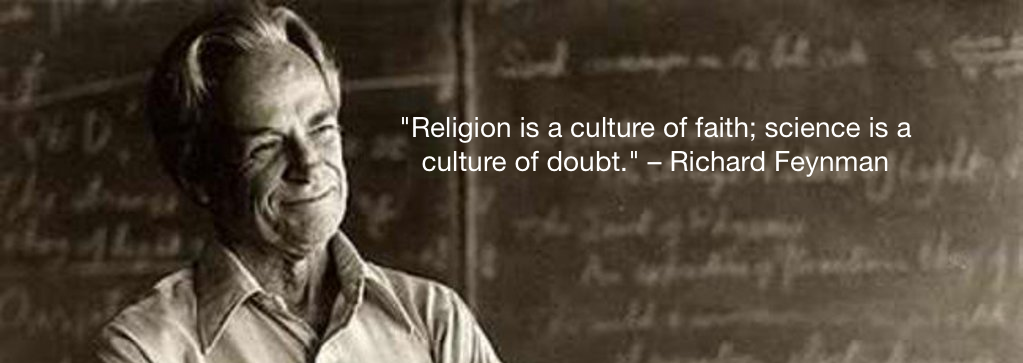
“Science is and always has been a work in progress,” said a scientist talking about a prediction he made about when a glacier would be gone. “As scientists, we publish the data based on our best understanding of that data at the time. That is the way science works.”


 Nullius in Verba