As we gallop toward 7 billion people, what can yeast teach us about population?
Love in the key of fermentation
This was written during February, the month with Valentine’s Day, which leads our thoughts to yeasts. Okay well, love. But love can lead to sex, and that leads to reproduction. Yeasts may not know about love, but they do know reproduction. So do we humans: our population here on planet earth will pass seven billion sometime this fall.
While making our bread dough rise or fermenting our potent potables, yeast eat and eat and eat, burping carbon dioxide and excreting alcohol as they go. Along with eating and excreting, they reproduce and reproduce and reproduce. While yeasts’ ability to double its population are infinite, its food supply and its environment are not. When they run out of food or poison their environment, they die as quickly as they bred.
The Reverend Thomas Malthus might have been thinking of yeast when he wrote an “Essay on Population” in 1798. The rev fretted that the human population could grow geometrically while our food supply could grow only arithmetically. We would, just as yeast do, grow too rapidly, and overtake our food supply (or poison our environment), thereby loosing the Four Horsemen of the Apocalypse with their deadly scythes of war and high food prices (The book of Revelations speaks of a “quart of wheat” costing a day’s wages). After which, as they say on the cartoon series, Futurama, “We’re boned.”
You might well argue that we have more sense than one-celled organisms (then again, if you have seen such television shows as “Jersey Shore” or “Jackass,” your skepticism is understandable).

Such well-respected academics as Jared Diamond reference Malthus, but they also toss in our society’s consumerism. Indeed, in Professor Diamond’s bestseller, “Collapse, How Societies Choose to Fail or Succeed,” he warns that the West, “consumes 32 times more resources, such as fossil fuels, and puts out 32 time more wastes, than do inhabitants of the third-world;” worrying that the “low impact” people of the developing countries are becoming “high impact” people.
View from space of “low impact” North Korea and consuming South Korea
I question the low impact of low-consuming developing countries. After all, according to defectors from North Korea, the average “low impact” peasant lives more of a hunter-gatherer existence with the countryside paying the price. In the book “Nothing to Envy,” Barbara Demick says these non-consumerist peasants made “ Barbara Demick says these non-consumerist peasants made “traps out of buckets and string to catch small animals in the field…stripped the sweet inner bark of pine trees to grind into a fine powder that could be used in place of flour.” And, because they were desperate, “They picked kernels of undigested corn out of the excrement of farm animals.”
I have no doubt that some of us consume excessively. Why would anyone need a Ferrari  458 Italia, with its 274 cubic-inch engine, 0-60 in less than four seconds, boasting a maximum speed over 200 mph, and costing about one-quarter million dollars? Answer: because it’s cool; and because at least for males, we seek prizes to indicate our status and sexual worth within the tribe. That, and the car is s-o-o-o cool. I mean look at it…I apologize, where was I?
Even if our consumption is occasionally overly indulgent, let’s be clear: The world is getting cleaner, more livable for people and animals, safer, and more sustainable than it has ever been. Consider this from Matt Ridley’s book, The Rational Optimist, “In Europe and America rivers, lakes, seas, and the air are getting better all the time…Swedish birds’ eggs have 75 per cent fewer pollutants in them than in the 1960s. American carbon monoxide emissions are down 75 per cent in twenty-five years.” In fact, “Today, a car emits less pollution travelling at full speed than a parked car did in 1970 from leaks.”
“Okay,” you might be saying, “That doesn’t matter, we are running out of room to put everyone. We need to stop having so many babies!”
We are not breeding as if we were yeast cells.
Over the past forty years, the whole world has seen dramatic drops in birth rates with a demographic transition from high infant mortality and high birth rate to lower infant mortality, and lower birth rate. The United Nations projects that the number of children per woman will drop below replacement value in 2025—and continue falling. Current momentum will take the world’s population up to around nine billion, after which it, too, is expected to drop.
So, as you sit watching your television and drinking a beer, remember what yeasts do. That, as John Ciardi said, “Fermentation and civilization are inseparable.” And be thankful you are not like yeast.
Cheers.
Weekend Postcards from the Cascade Range
My wife and I travelled to Portland, Oregon last week to visit my son. We stayed with friends close to Mount Shasta. In the morning, a storm approached threatening snow over Siskiyou Summit. Winter makes for some great photos.
Weekend Postcard: Snow Dusted Hill, Lake County, California

Trees ain’t thermometers
I used to work on Mountain Home State Forest in the southern Sierra. MHSF has about 3000 specimen-sized sequoia within its boundaries. Dendrochronolgists often visited to see the stumps from logging in the mid to late 1800s. These were often over 2000 years old when they had been cut.
The Dendrochronolgists were interested in the tree-ring patterns. Trees grow fast or slow in response to many factors and these seasonal factors (light, water, nutrients) created ring signatures or patterns. Certain years might have been favorable for growth with plentiful water, light and nutrients (each favorable year would be marked a large, wide ring) and certain years might have had poor conditions for growth–drought, late spring conditions, early winter–marked by thin (in some cases–microscopic) rings. In general, the wider the ring the more favorable the growing season, the narrower the ring the poor the growing conditions. These ring patterns can be distinctive and can be used to date archeological sites (where wood is present).
Oxford’s Tree-ring Laboratory put it this way:
The way dendrochronology works is relatively simple. As a tree grows, it puts on a new growth or tree-ring every year, just under the bark. Trees grow, and put on tree-rings, at different rates according to the weather in any given year: a wider ring in a favourable year and a narrower ring in an unfavourable year. Thus, over a long period of time (say 60 years or more) there will be a corresponding sequence of tree-rings giving a pattern of wider and narrower rings which reflect droughts, cold summers, etc. In effect, the span of years during which a tree has lived will be represented by a unique fingerprint, which can be detected in other geographically-similar tree-ring chronologies.
Using tree rings as a proxy for temperature however is fraught with caveats and pitfalls.
Mike D.‘s of the Western Institute for Study of the Environment comment (on William M. Briggs’ blog) about using tree ring data as proxies for temperature is an excellent explanation of the problems of using tree ring growth for temperature. He starts with how tree rings are laid down:
Diameter growth on any tree is theoretically a sigmoid growth function. No tree puts on constant radial growth year after year. Trees grow by adding a layer of new wood at the cambium, under the bark. Each year a larger surface area is added. If growth is constant, the rings get narrower. But growth is never constant. There is significant deviation from ideal (model) sigmoid diameter growth in individual trees regardless of the weather. Even when sigmoid growth models are used, the natural variation adds statistical error.

So as the diameter expands, the amount of material put on would need to be more if the ring’s width was to stay the same as the previous season. Think of a clay disk that you add the same amount of clay to in successive rings. The volume of clay would be the same but the thickness of each new ring would decrease. The ring growth is S-shaped (sigmoid) because initially the tree has little foliage for photosynthesis and often puts its initial years into root development for survival. Then once roots are deep enough the tree puts its growth into height and width.
He then points out that tree-to-tree competition for light, water, and nutrients also affects the ring growth:
Dense stands exhibit narrow rings on individual trees, sparser stands may have wider ring growth, yet both stands may have equivalent gross growth. That’s why only open-grown trees are supposed to be selected for ring studies. But nobody knows what the tree density surrounding an individual tree was 100, 200, 500 years ago. Competitors could have arisen and died without leaving evidence of their presence so long ago. More error.
Besides competition, disease and injury can affect growth.
Trees can sustain injuries that affect growth, such as top and branch damage, that are difficult to detect 200 years later, especially a few feet off the ground where the rings are sampled. There are very few pristine, undamaged trees. I know, having searched for such across broad acreages. Open grown trees at high elevations are always damaged. A heavy winter snow can snap off branches and the tree will exhibit reduced diameter growth for a few years, even if growing season conditions are ideal.
This makes using tree ring data as stand-ins for temperature problematic.
Ring width has all but been abandoned as a temperature proxy. Instead, the latest technique is sampling rings for O18 ratios, under the assumption that O18 varies with temperature. Regardless of the ring width, the O18 ratio is supposed to have recorded growing season temperature. But that theory is fuzzy and mushy, and O18 ratios in living trees correlate very poorly with known growing season temperatures. In other words, it calibrates with much error at best.
Trees are not thermometers, but even thermometers have some serious measurement error problems.
Tree ring studies are a fad akin to phrenology and other discredited pseudosciences that has not dissipated as it should have decades ago.

Weekend Postcard: Vineyard, Lake County, California

A rare snow led to this picture of a vineyard’s rows of grape vines waiting for spring to arrive.
Mark Bittman asks, “What Do You Think About Genetically Engineered Food?”
 Mark Bittman is asking, “What Do You Think About Genetically Engineered Food?”
Specifically, he wants you to answer four questions for a non-scientific poll:
1. Does it bother you that there are genetically engineered ingredients in most of the foods sold in American supermarkets?
2. Do you want the products that contain genetically engineered ingredients to be labeled “Contains Genetically Engineered Ingredients”?
3. Do you think that government agencies should enact stricter regulations for testing, growing, and marketing of GE crops and other products?
4. If genetically engineered salmon were to come on the market, it would not be labeled according to current policy and would therefore be indistinguishable (visually, at least) from other farm-raised salmon. Would this curb your overall purchasing of salmon?
It probably won’t surprise you that most of people said “yes” to all four questions.
I said “No” to all four.
Gene splicing characteristics is just the latest step in the way we humans have been altering the genetic structures of our food for 10,000 years. It is in many ways safer than natural breeding. After all, natural breeding involves the random mixing of tens of thousands of genes (genes are recipes for proteins) from two parent plants, resulting in entirely new proteins and other plant chemicals never before part of the food supply, but most people find this practice natural and quite acceptable.
Historically, worries about new technology have been wide of the mark. In 1825, Britain’s Quarterly Review howled about “[L]ocomotives travelling twice as fast as stagecoaches!” Some physicians predicted that the incredibly high speeds [nearly 20 miles per hour!] would cause psychological harm. Veterinarians worried that passing trains would cause pregnant mares to spontaneously abort. “We trust that Parliament will, in all railways it may sanction, limit the speed to eight or nine miles an hour,” the Review admonished.” Can’t be too careful, now can we?
A European Union report put it this way, “[A] genome (e.g., all the genes that make up an organism’s DNA) is not a static entity but a dynamic structure continuously refining its gene pool. So, for a scientist in genetics, the act of splicing to generate a transgenic organism is a modest step when compared to the genomic changes induced by all the ‘crosses’ and breeding events used in agriculture and husbandry.” Now, instead of breeding and repeatedly crossbreeding out unwanted traits, agronomists can place a single trait into a plant.
“[T]he environmental movement has done more harm with its opposition to genetic engineering than with any other thing we’ve been wrong about,” says Stewart Brand, leading environmentalist who authored The Whole Earth Catalog. “We’ve starved people, hindered science, hurt the natural environment, and denied our own practitioners a crucial tool. In defense of a bizarre idea of what is ‘natural’…we make ourselves look as conspicuously irrational as those who espouse ‘intelligent design’ or ban stem-cell research, and we teach that irrationality to the public and to decision makers.”
Should you wish to vote, you’ll need to register with the New York Time’s site. Bittman’s poll is here: http://bittman.blogs.nytimes.com/2011/02/15/what-do-you-think-about-genetically-engineered-food/#preview
A warmer and wetter world
I found a link the other day to a government website with global mean precipitation data from 1900 to 2000. Of course, I can’t find the link now (please comment if you have the link, but first see the note at the end of the post).
Anyway, I put the numbers into an Excel spreadsheet and graphed the data and added a trendline. (If you would like a copy of the xls file, please ask for it in the comment section below.) As the world warms it is getting wetter. As Matt Ridley writes in his book The Rational Optimist:
If you take the IPCC’s [International Panel on Climate Change] assumptions and count the people living in zones that will have more water versus zones that will have less water, it is clear that the net population at risk of water shortage falls by 2100 under all their scenarios. (emphasis added)


Even the EPA cites the IPCC (2007) to say much the same thing:
As global mean temperatures have risen, global mean precipitation also has increased. This is expected because evaporation increases with increasing temperature, and there must be an increase in precipitation to balance the enhanced evaporation (IPCC, 2007). Globally, precipitation over land increased at a rate of 1.9 percent per century since 1901, but the trends vary spatially and temporally. Over the contiguous U.S., total annual precipitation increased at an average rate of 6.1 percent per century since 1901, although there was considerable regional variability. The greatest increases came in the South (10.5 percent per century), the Northeast (9.8 percent), and the East North Central climate region (9.6 percent). A few areas such as Hawaii and parts of the Southwest have seen a decrease.
Crops may flourish with warmer climes and more CO2. There is some indication that in California some trees are increasing their ranges in response to this change. While increasing temperatures do have their downside, they also have positive benefits as well.
Plants moving to lower and warmer elevations in a warming world
A news release out of the University of California at Davis says, “study shows plants moved downhill, not up, in warming world.” 
In a paper published last month in the journal Science, a UC Davis researcher and his co-authors challenge a widely held assumption that plants will move uphill in response to warmer temperatures. It turns out that plants respond more to moisture. The results are based on historical data collected by the U.S. Forest Service since the 1930s
Between 1930 and 2000, many California plant species moved downhill an average of 260 feet. Jonathan Greenberg, an assistant project scientist at the UC Davis Center for Spatial Technologies and Remote Sensing said, “While the climate warmed significantly in this period, there was also more precipitation. These wetter conditions are allowing plants to exist in warmer locations than they were previously capable of.”
While the news release does not mention it, let me conjecture that increased CO2 availability may have played a role in the plants ability to move downhill despite warmer temperatures encountered at lower elevations. Plants do not need to open their stomata as much or as often for CO2 intake and therefore do not lose water through transpiration.
Many forecasts say climate change will cause a number of plants and animals to migrate to new ranges or become extinct. That research has largely been based on the assumption that temperature is the dominant driver of species distributions. However, the new study reveals that other factors, such as precipitation, may be more important than temperature in defining the habitable range of these species.
The findings could have global relevance, because many locations north of 45 degrees latitude (which includes the northernmost United States, virtually all of Canada and Russia, and most of Europe) have had increased precipitation in the past century, and global climate models generally predict that trend will continue, the authors said.
The study is titled “Changes in climatic water balance drive downhill shifts in plant species’ optimum elevations.” Greenberg’s co-authors are: graduate student Shawn Crimmins (the lead author), assistant professor Solomon Dobrowski (a UC Davis alumnus) and research analyst Alison Mynsberge, all of the University of Montana; and assistant professor John Abatzoglou of the University of Idaho.
Weekend Postcard: San Francisco Bay at sunset

This is a panorama of the San Francisco Bay area at sunset. The Bay bridge and Yerba Buena (aka Goat) Island are on the left and the Golden Gate bridge is on the right. Angel island, the Ellis Island of the West, is located in the right side of the photo (behind the chimney).
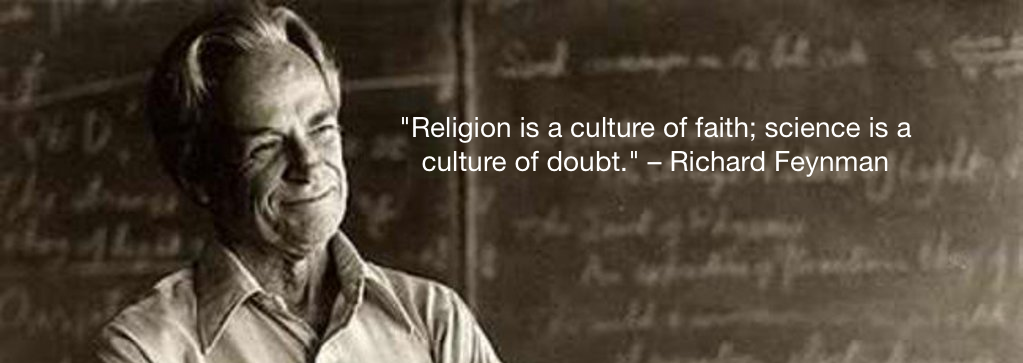
 Nullius in Verba